
The Kombucha Market Map: How to Choose the Right Category for Your Brand
Not all kombucha is created equal. And that's not just about flavour or ingredients. It's about the production approaches that underpin the product.
If you're developing a kombucha brand, renovating an existing range, or briefing a new SKU, one of the biggest decisions you'll make is the market segment you're playing in. That choice will shape your production process, supply chain, costs and the trade-offs you'll manage as you scale.
This guide maps the four kombucha categories in today's market and explains what makes them fundamentally different.
Why Kombucha Market Segmentation Matters
The kombucha category has evolved fast over the last two decades. What started as a niche product has split into multiple production approaches, each built for different consumers, price points and distribution channels.
Understanding these segments shapes the big decisions. Production method. Cost of goods. Whether you can work with co-packers. How you manage shelf life. The market breaks into four categories: Traditional, Craft/Mainstream, Sugar-Free Ambient, and Hard Kombucha. Each has different production needs and trade-offs.
Traditional Kombucha: Live, Unpasteurised and Unfiltered
Traditional kombucha stays closest to the original home-brew method. It's fermented with live cultures, left unpasteurised, and often unfiltered. That means visible yeast strands, active bacteria, and a product that continues to ferment slowly in the bottle or can. The result is a complex, sometimes funky flavour. But that also creates production and supply chain challenges.
This category targets health-focused, gut-health enthusiasts who value authenticity, live probiotics and minimal processing. They're usually happy to pay a premium for "real" fermentation and accept some variation in taste and carbonation from batch to batch.
The Production Reality for Traditional Kombucha
Operationally, this is demanding. You need full in-house fermentation with temperature control throughout. Cold chain is mandatory from production through to retail. You'll be running rigorous quality tests to manage alcohol drift and pH stability.
Shelf life is short. Typically 30 to 90 days refrigerated. That increases your write-off risk and means tighter retailer relationships. Secondary fermentation in-pack is also a constant risk. That can lead to over-carbonation, alcohol levels exceeding 0.5% ABV, or gushing bottles.
That means your capital needs are high. Fermentation tanks, temperature-controlled storage, and the expertise to manage wild cultures are all a part of this.
Who This Works For
Brands like GT's, Jarr and Wild have built strong businesses here. But it needs commitment to craft, access to cold chain distribution, and retailers who value premium, short-shelf-life products. It works best if you have direct-to-consumer channels, on-trade presence, or engaged local markets where you can turn product quickly.
Craft and Mainstream Kombucha: Built for Scale and Consistency
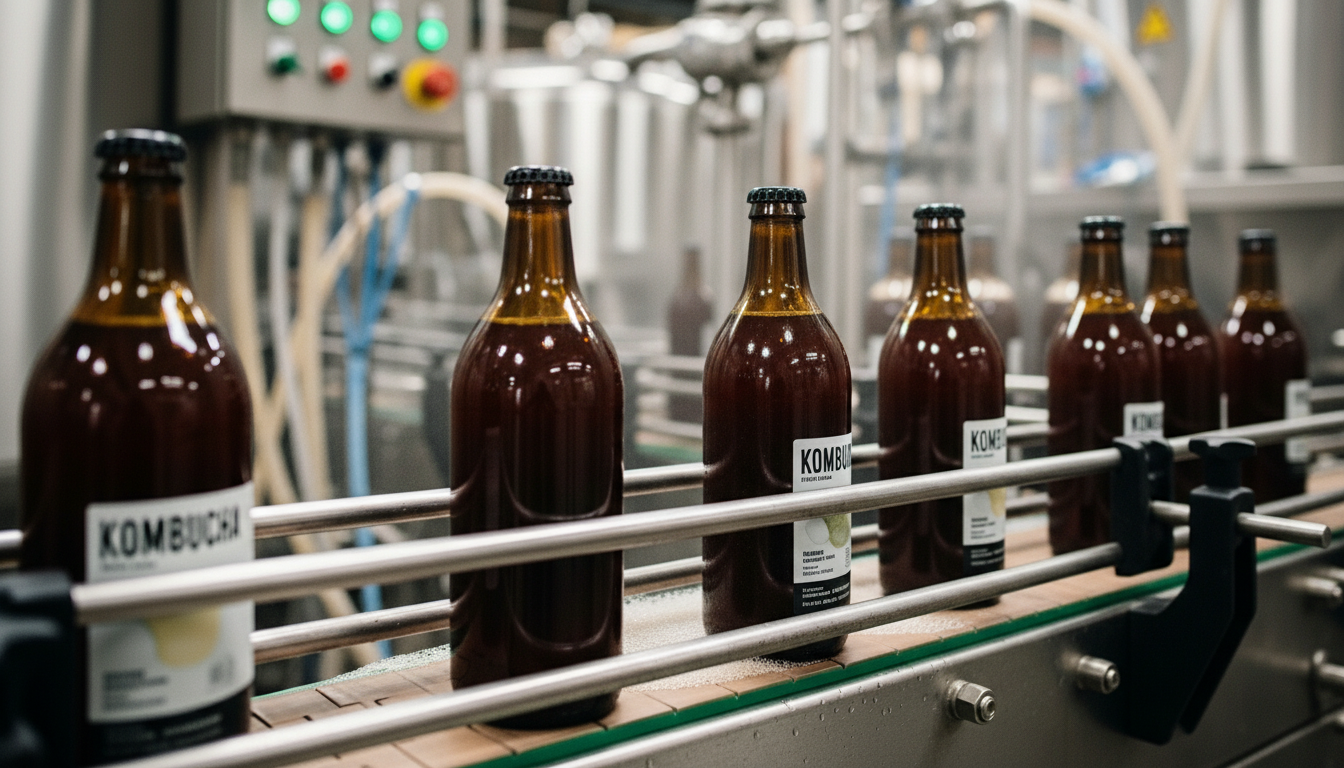
Craft and mainstream kombuchas shift the focus from wildness to reliability. These brands use controlled fermentation. Often that means incorporating high-strength fermented tea bases that are pre-brewed to tight specs. They combine that with natural flavourings and pasteurisation or filtration. The goal is to extend shelf life and deliver consistent taste and quality, batch after batch.
The target consumer here is the mainstream health-conscious shopper. They want gut-health benefits and "better-for-you" refreshment. But without the funk or unpredictability of traditional brews. They're price-sensitive but willing to pay a bit more than they would for soft drinks.
How Production Changes at Scale
This is where the category unlocks real advantages. Many brands use a base-first approach. You start with a concentrated, pre-fermented organic base. Then you finish with dilution, flavouring and carbonation on a faster, more flexible line.
Pasteurisation or filtration stabilises the product and extends shelf life to 6–12 months. That cuts write-offs and makes co-packer relationships far more straightforward. If you're working with contract manufacturers who aren't set up for complex brewing, fermented bases remove that barrier entirely.
Capital intensity drops compared to traditional models, and throughput per production run goes up significantly.
The Positioning Trade-Offs
The trade-off is perception. Some consumers see pasteurised or base-first kombucha as "not real". That means your brand story, label integrity and flavour performance need to work harder. This is also a crowded segment. Differentiation comes from flavour innovation, functional ingredients like adaptogens or nootropics, format creativity, and clear brand positioning.
Health-Ade, Humm, Gutsy Captain and Los Bros have all built strong businesses by focusing on repeatable quality and scalable production. If your goal is to win distribution in grocery multiples, achieve operational efficiency, and work with co-packers to expand regionally or internationally, this is the category to study. Our guide on scaling kombucha production without new equipment walks through the practical steps many brands in this segment use.
Sugar-Free Ambient Kombucha: The Shelf-Stable Unlock
Sugar-free ambient kombucha is a relatively recent innovation that's opened up entirely new distribution channels. The production approach replaces all fermentable sugars with non-nutritive sweeteners like erythritol or stevia during or after fermentation. Because there's no residual sugar, the yeast and bacteria can't restart fermentation in the can. That eliminates the need for refrigeration and enables an ambient supply chain.
Why Ambient Changes Everything
That single change has big effects. Logistics and storage costs drop. Shelf life extends to 12+ months at room temperature. You can reach convenience stores, gyms, online channels and international markets where cold chain is expensive or unavailable. Alcohol and carbonation levels stay stable because fermentation is fully stopped.
The consumer appeal is clear. Zero sugar. Low calorie. Functional gut-health claims. All without the premium pricing or limited availability of chilled kombucha.
The Taste and Education Challenge
The challenge is taste and consumer education. Achieving a kombucha flavour profile without residual sugar needs careful formulation. You'll want to work with experienced fermented base suppliers who understand the sensory trade-offs. Some shoppers still avoid sweeteners like erythritol or stevia. That means you'll need to invest in sampling, education and clear communication around the zero-sugar benefit.
Remedy, Nexba and Lo Bros have proven this category works at scale. It's particularly strong for brands targeting sugar-conscious consumers or expanding beyond traditional retail. If you're briefing a new SKU aimed at convenience, e-commerce or export markets, ambient kombucha is worth serious consideration.
Hard Kombucha: The Alcohol Crossover
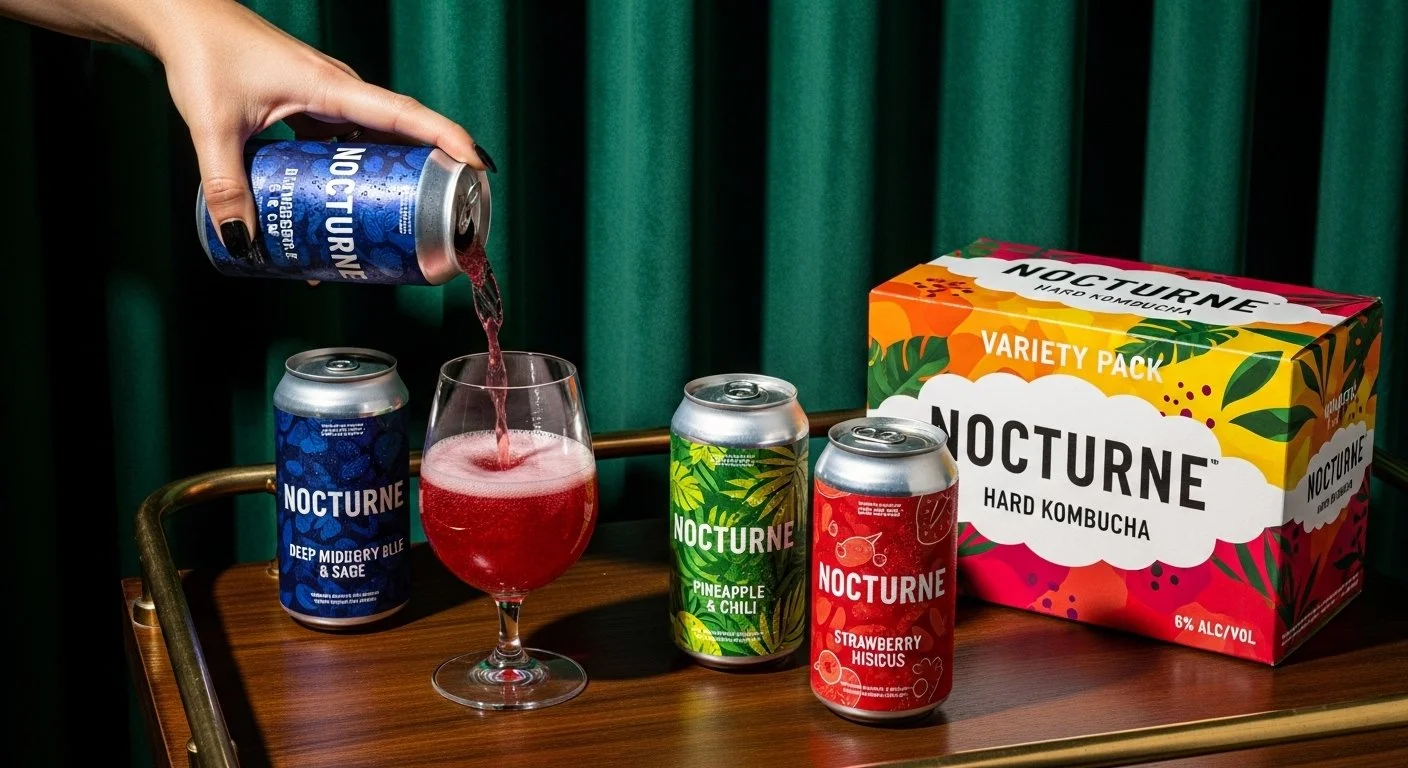
Hard kombucha ferments to a higher alcohol level. Typically 3–7% ABV. That positions it as an alcoholic beverage competing with beer, cider and ready-to-drink cocktails. It appeals to adult drinkers looking for lower-calorie, gut-friendly or naturally positioned alternatives to traditional alcohol.
Production and Regulatory Requirements
Production needs extended fermentation or secondary fermentation to achieve target ABV. Plus the licensing, labelling and excise duty obligations of any alcoholic product. Distribution shifts to alcohol channels. Off-licences, bars, restaurants and specialist retailers.
The regulatory complexity is real. Licensing, tax structures and age restrictions vary significantly by market. But the category opportunity is growing fast, particularly among millennials and Gen Z drinkers exploring the "mindful drinking" trend. Many brands use fermented bases with controlled fortification to hit precise ABV targets consistently. That simplifies production and reduces the risk of batches drifting out of spec.
Flying Embers, Booch & Brew and JuneShine have built strong brands by positioning hard kombucha as a better-for-you alcohol option with clear functional and flavour credibility. If you're exploring the no/low or better-for-you alcohol space and have the capability to navigate licensing and excise, this category offers genuine white space.
Choosing the Right Category for Your Brand
Your choice should be driven by three things. Your target consumer. Your distribution strategy. Your manufacturing capabilities.
Start by asking: who are you targeting? Authenticity-focused gut-health enthusiasts lean towards Traditional. Mainstream health-conscious shoppers respond to Craft and Mainstream. Zero-sugar, convenience-driven consumers find Sugar-Free Ambient. Mindful alcohol drinkers are the audience for Hard Kombucha.
Then map your distribution ambitions. Premium chillers, D2C and on-trade suit Traditional or Craft. Grocery multiples and convenience work for Craft, Mainstream and Sugar-Free Ambient. Off-licences, bars and restaurants are the natural home for Hard Kombucha.
Finally, be honest about your production capabilities. In-house brewing with cold chain control supports Traditional. Co-packer partnerships and base-first efficiency unlock Craft and Mainstream. Ambient supply chains and cost optimisation define Sugar-Free. Alcohol licensing and extended fermentation are must-haves for Hard Kombucha.
There's no single right answer. Only the answer that fits your brand positioning, operational realities and commercial goals. Many successful brands start in one category and expand into others as they scale or test new audiences.
What This Means for Ingredient Sourcing and Manufacturing Partnerships
Whichever category you choose, two decisions will shape your ability to execute well. Where you source your fermented ingredients. And whether you produce in-house or with a co-packer.
For Craft, Mainstream and Sugar-Free brands, using high-strength pre-fermented organic tea bases offers real advantages. Faster production cycles. Lower capital needs. Easier co-packer relationships. Consistent quality. For Traditional and Hard Kombucha brands, in-house fermentation control may stay essential to your story. But even here a hybrid approach can unlock flexibility without compromising authenticity.
If you're working with co-packers, choosing partners who understand fermented beverages makes a material difference. The right contract manufacturer should be able to handle bases, manage carbonation, and support your quality standards. They should also help you navigate shelf life and sensory challenges. If you're dealing with inconsistent batches or quality issues, that's often a signal to revisit your ingredient sourcing and production model.
Where to Go from Here
If you're building a new kombucha brand or rethinking your current range, start by mapping your positioning against these four categories. Be honest about your target consumer, your distribution ambitions, and your production capabilities. That clarity will guide every decision downstream. Recipe development. Ingredient sourcing. Co-packer selection. Pricing strategy.
Want to dig deeper into production methods, formulation and technical considerations for each category? Download our comprehensive Kombucha Producers Guide for detailed market insights, recipe guidance and case studies from brands at every stage of growth.
Ready to explore how fermented tea bases can support your kombucha strategy? Get in touch with our team to discuss your specific brief, request technical samples, or connect with our network of co-packers and flavour developers.
FAQ: Kombucha Categories and Production
-
The kombucha market breaks into four main categories. Traditional (live, unpasteurised, cold chain). Craft/Mainstream (pasteurised or filtered, consistent quality, often using fermented bases). Sugar-Free Ambient (shelf-stable, zero sugar with non-nutritive sweeteners). And Hard Kombucha (3–7% ABV, positioned as better-for-you alcohol). Each has different production needs and target consumers.
-
Traditional kombucha is unpasteurised, retains live cultures and continues fermenting slowly in the bottle. That creates complex flavours but needs cold chain and has shorter shelf life. Craft kombucha uses controlled fermentation, often with pre-fermented bases. It's typically pasteurised or filtered to stabilise the product, extend shelf life and improve batch consistency. Craft is easier to scale and work with co-packers.
-
No. Traditional, Craft and Mainstream kombucha need cold chain distribution and retail refrigeration. Sugar-Free Ambient kombucha uses non-fermentable sweeteners to stop fermentation completely. That allows for room-temperature storage and distribution. It cuts logistics costs and opens up new retail channels like convenience stores and e-commerce.
-
Yes, particularly for Craft, Mainstream and Sugar-Free categories. Using high-strength fermented tea bases makes co-packer relationships much simpler. The complex fermentation work is already done. Co-packers then focus on blending, flavouring, carbonation and packaging. Most contract manufacturers are already set up to handle that without specialist brewing capability.
-
A fermented tea base is kombucha brewed to high concentration with tea, sugar and live cultures. It's then stabilised to tight specs for pH, ABV and taste. You dilute and finish it on your line. That speeds up production, improves consistency, and reduces capital needs. It also simplifies co-packer partnerships. It's ideal for Craft, Mainstream and Sugar-Free brands focused on scalability and repeatable quality.