
Find the Right Beverage Co-Packer in Europe or the USA.
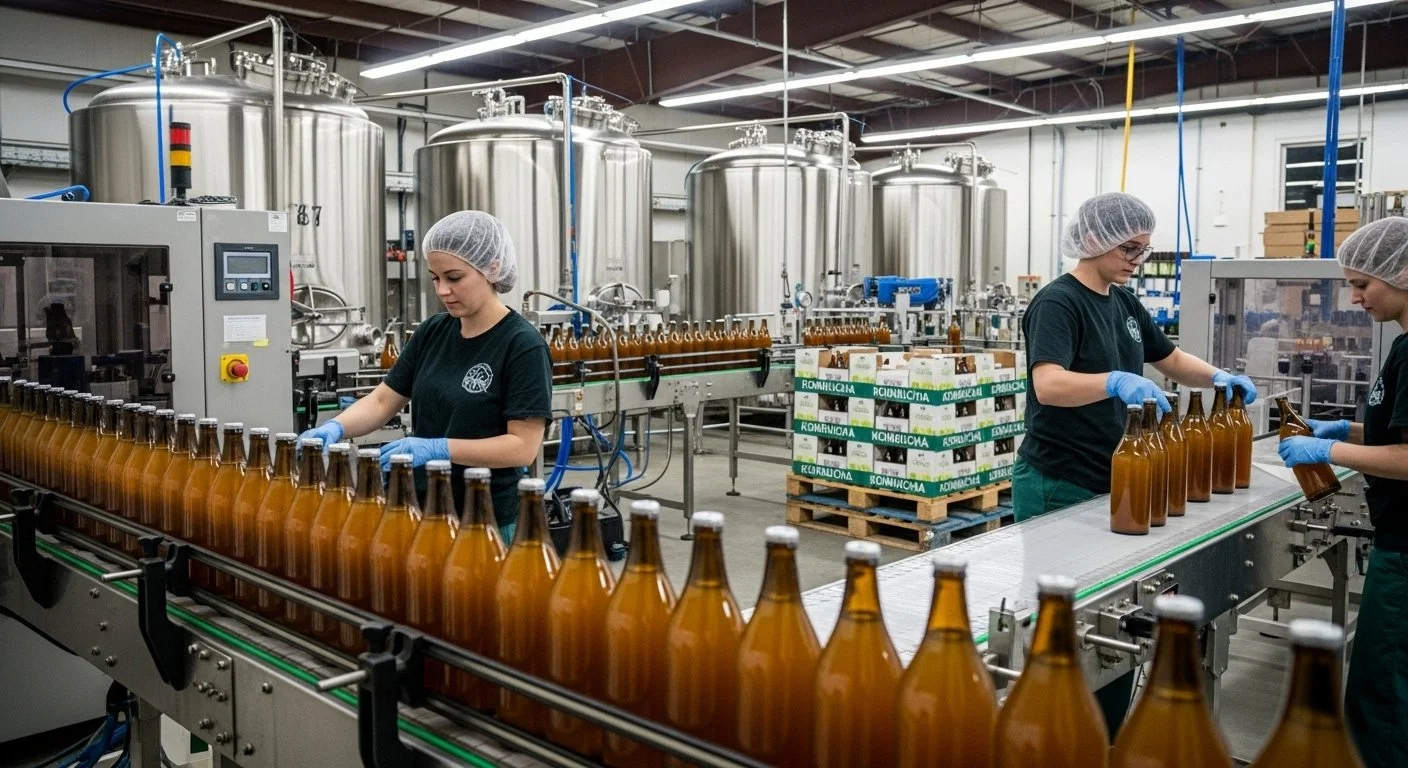
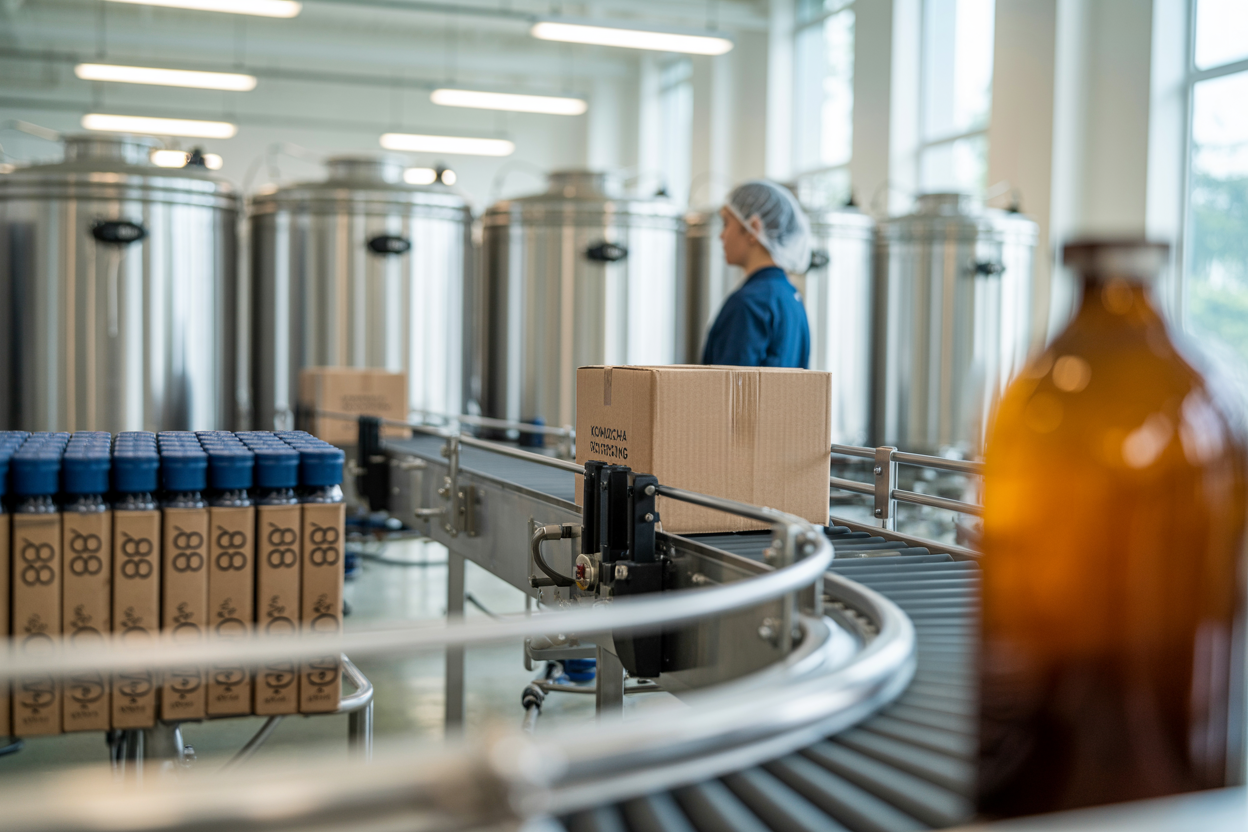
Launching or scaling a beverage brand doesn’t have to mean building your own factory. Our pre‑approved network of beverage contract manufacturing and co‑packing services helps you find the right drink co‑packer in Europe and the USA for kombucha, functional drinks, RTDs and wellness shots.

Kombucha & Fermented Beverage Co-Packers in Europe and the USA.
If you’re looking for a drink co‑packer in Europe or a drink co‑packer in the USA, we help you navigate a crowded landscape and find facilities that actually match your category, volume and compliance needs.
We look at line capabilities, certifications, minimum order quantities and geography, then shortlist beverage contract manufacturing partners who can realistically support your growth.
Beverage Categories We Support:
-
If you need a kombucha co‑packer in Europe or a private label kombucha manufacturer for new markets, we connect you with partners who already run kombucha at scale.
Our bases are designed to behave predictably in contract manufacturing environments, helping you get stable flavour, ABV and pH while keeping ingredient lists clean.
Traditional and hard kombucha.
Raw and pasteurised options, depending on your brand and route to market.
Support to optimise recipes for co‑packing so they run smoothly on third‑party lines.
-
Functional beverage co‑packers and RTD beverage co‑packers need stable inputs to run high‑function recipes without constant troubleshooting.
We work with co‑packers experienced in functional drinks, wellness shot co‑packing and modern soft drinks, while our fermented bases provide natural acidity and complexity that fits clean‑label positioning.
Functional beverages and wellness shots (ginger, turmeric, immunity and more).
RTD tea and coffee, modern sodas and enhanced waters.
Low/no alcohol and hard‑kombucha‑adjacent concepts where alcohol control matters.
Custom white label projects
How Our Beverage Contract Manufacturing Support Works:
We combine fermented‑ingredient expertise with trusted facilities, so you get consistent flavour, controlled alcohol levels and calmer audits as you grow.

Share Your Project with Our Team
Tell us about your beverage category, target markets (Europe, USA or global), preferred formats and approximate monthly volumes.
We Shortlist Suitable Drink Co‑Packers
We review your brief and identify beverage contract manufacturing partners who can meet your technical, commercial and regulatory requirements.
We Support Introductions and Scale‑Up
We help you prepare for technical calls, align recipes with co‑packer processes and move towards trials and full‑scale production.
Who this Service is For:
-
You need a beverage co‑packer or contract manufacturer so you can focus on brand, sales and distribution instead of running a plant.
-
You’re outgrowing your own facility or current partner and need reliable drink co‑packers in Europe or the USA.
-
You’re exploring private label kombucha, functional drinks or RTDs and need production that will hold up in retail and on‑trade.
-
You’re a co‑packer who wants fermented bases that make kombucha and functional beverage projects more predictable.
What to Look for in a Beverage Co-Packing Partner
Most brands searching for beverage co-packing support focus on price and location. The facilities that cause problems at launch are the ones that looked fine on paper but couldn't handle the specific technical demands of your product. We've built our network around facilities that meet the criteria below — so when we shortlist a beverage contract manufacturing partner for you, the qualification work is already done.
-
Not every co-packer runs every format. Cans, glass bottles, pouches, PET, and Tetra all require different filling lines — and switching formats mid-scale is expensive and disruptive. Confirm that a facility's line capabilities match your intended packaging format before any introduction, and that they have realistic capacity at your volume, not just theoretical availability.
-
Minimum order quantities vary enormously across the co-packing landscape. Some large soft drink and energy facilities expect 50,000+ units per run. Others — particularly those specialising in premium and functional categories — will work with brands from a few hundred litres upward. If you're launching or testing a new SKU, MOQ flexibility matters as much as unit cost.
-
Co-packing fermented beverages introduces technical demands that standard soft drink facilities aren't equipped for. Live cultures, naturally occurring carbonation, and active fermentation require specific handling protocols. A co-packer without fermented beverage experience will treat your kombucha like a flavoured water. The result is inconsistent pH, unpredictable ABV, and shelf stability problems that surface after your product is already in retail.
Pairing an experienced facility with a stabilised, predictable fermented base removes the majority of this risk before you go near a bottling line.
-
Cross-contamination is an underappreciated risk in beverage co-packing environments. Facilities running multiple categories — dairy, allergens, alcohol — need rigorous Clean-in-Place (CIP) protocols and documented Good Manufacturing Practice (GMP) standards. For brands targeting health-conscious consumers or retail buyers with strict supplier requirements, ask to see cleaning validation records and audit history before committing to any facility.
-
Your co-packer's certification profile directly affects your route to market. Organic claims, Kosher and Halal positioning, and GFSI/SQF compliance all require the facility — not just your ingredients — to hold the relevant accreditations. Map your target retail channels against facility certifications before shortlisting. A mismatch here can derail a launch at exactly the wrong moment.
-
EU and US regulatory environments are materially different — particularly around alcohol labelling, organic certification, and food safety standards. A co-packer cleared for UK and EU retail isn't automatically approved for US distribution. If you're building for multiple markets, confirm that your partner either holds multi-market approvals or has a clear pathway to them.
Let’s Discuss How We Can Support You
Our Articles on Co-Packing
FAQ: Beverage Contract Manufacturing & Co‑Packing Services
-
Beverage contract manufacturing is when a third‑party producer makes and packs your drink to your specification, so you don’t have to invest in your own full‑scale facility.
-
Beverage co‑packing services are production and packaging services provided by specialised drink co‑packers, often including filling, labelling and secondary packaging, with you supplying the recipe and brand.
-
We focus on Europe, North America, Asia and Oceania, and selectively support other markets where premium functional beverages are commercially viable, excluding Canada and some ultra‑low‑cost markets.
-
Minimums vary by facility and category, but most partners expect at least 10,000 units per run, with higher minimums for some large soft drink and energy plants.
-
Yes. Our fermented bases and technical support help you simplify recipes, improve stability and get alcohol and acidity under control before you go near a bottling line, which makes life much easier for any co‑packer.