Scaling Kombucha Production from 100L to 1000L+ Without New Equipment
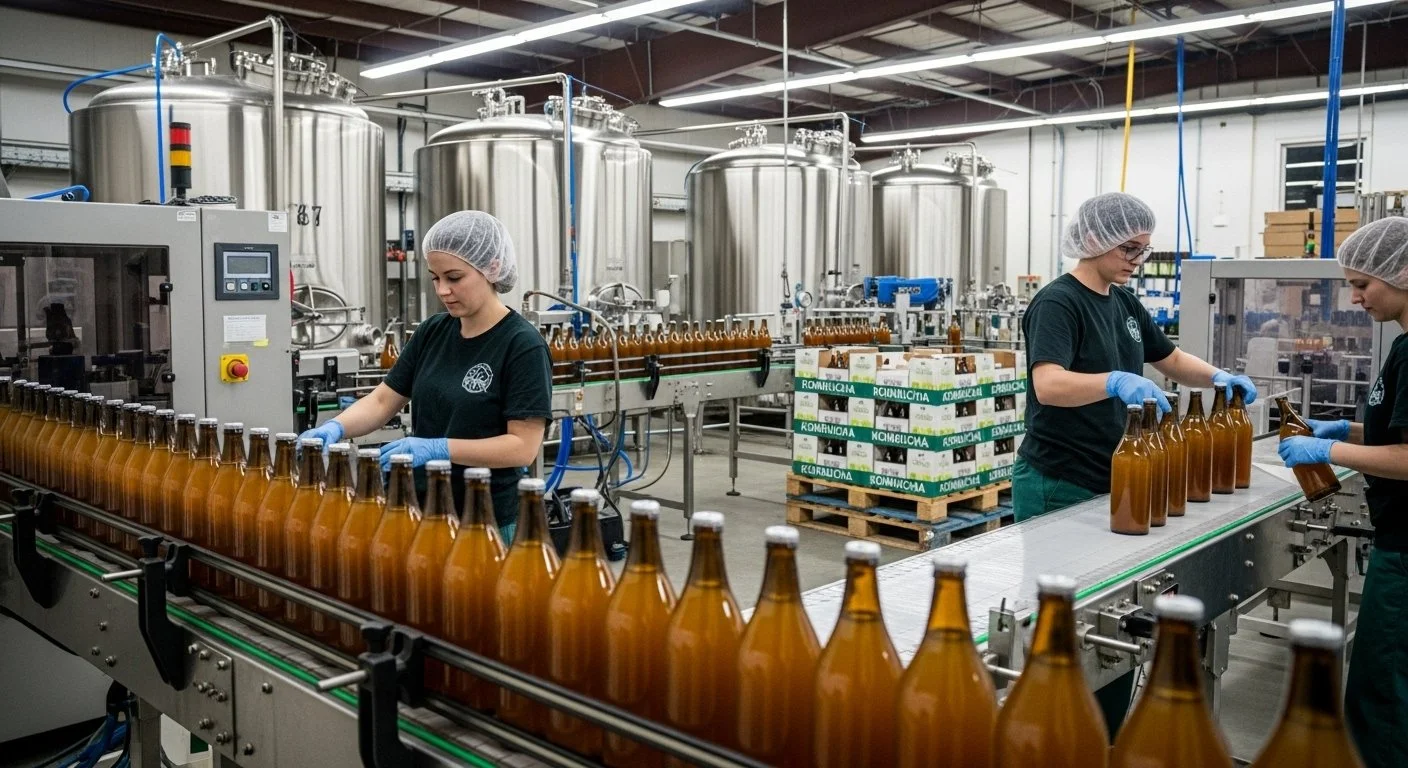
You're brewing 200 litres per week. Sales are climbing. Retailers are asking for more volume. Your distributor just secured three new accounts that could double your current output.
This should be exciting. Instead, you're doing maths that doesn't work.
Scaling to 500L per week means low five figures in new fermentation tanks. Add temperature control systems, and you're pushing higher. Then there's the bigger question—space, regulatory approval, installation downtime, and whether your cash flow can even absorb it.
The assumption feels unavoidable: more volume requires more equipment.
But it doesn't have to. If you're already producing commercially, there are faster, leaner ways to scale kombucha production capacity - often using the tanks you already own. This post explores three strategies that let you increase kombucha output dramatically without the capital outlay or operational disruption that comes with traditional expansion.
The Hidden Capital Trap of Traditional Scaling
Most kombucha producers scale the obvious way: buy more tanks, ferment more liquid, repeat. It's linear. Predictable. And expensive.
Here's what traditional kombucha production scaling typically involves:
New fermentation vessels (starting at low five figures per tank depending on size and spec)
Temperature control systems to maintain consistency across batches
Additional floor space, which often triggers planning permission, lease renegotiations, or relocation
Extended lead times (12–16 weeks for custom equipment orders)
Installation downtime that pauses or slows current production
For a brand brewing 200L per week and aiming for 1,000L, you're looking at significant investment before factoring in the labour to manage more fermentation cycles, the increased ingredient costs, and the knock-on complexity of scheduling, QA testing, and compliance documentation.
The issue isn't just cost. It's time. Fermentation cycles for traditional kombucha can run 7–21 days depending on your process. Every new batch ties up tank capacity. Every delay compounds. When demand spikes, your infrastructure can't flex with it.
That rigidity is what makes capital-light scaling so valuable. You're not avoiding growth. You're removing the bottleneck.
Unlock More Capacity From Your Existing Tanks
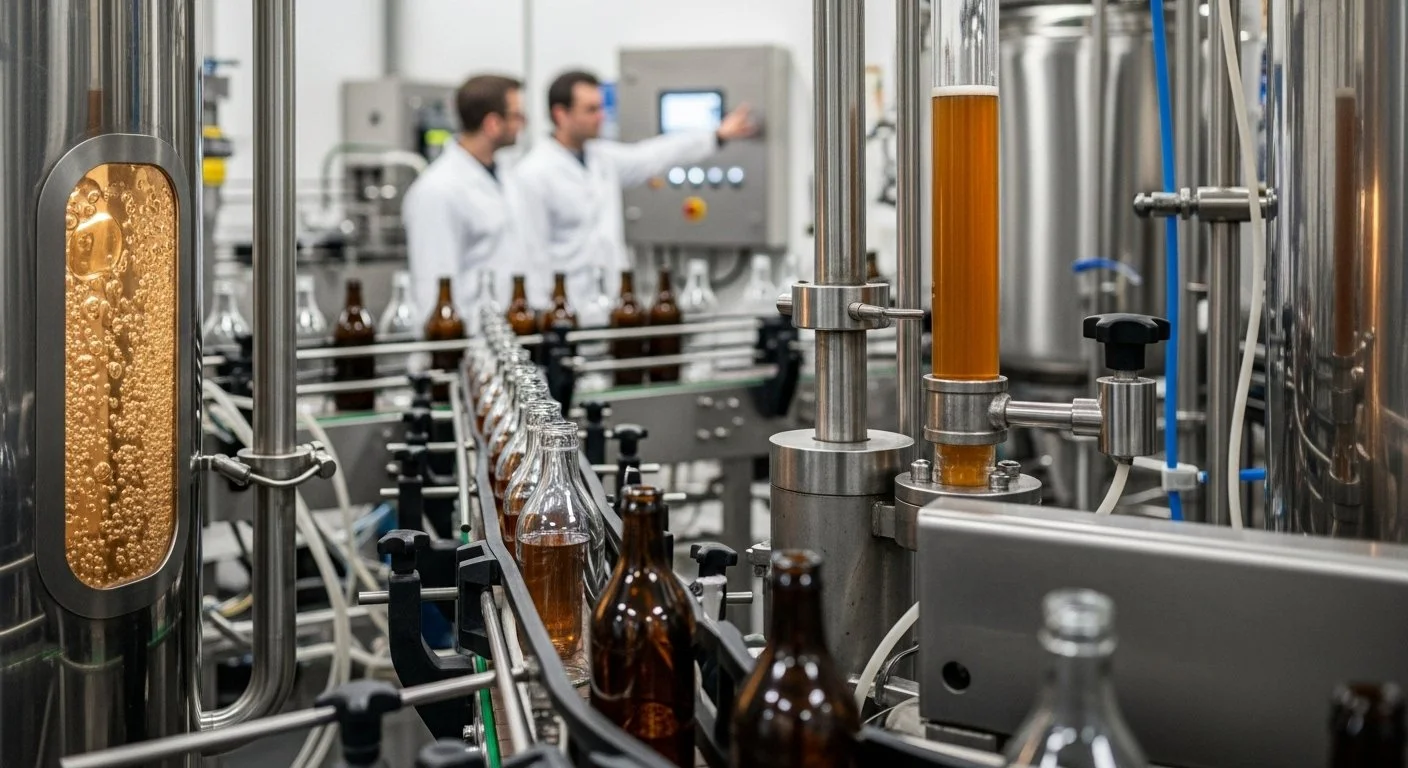
Before investing in anything external, audit what's already in your facility. Most small to mid-scale producers have latent capacity they're not fully using. Tightening your fermentation process can unlock 20–40% more throughput without spending a penny.
Reduce Fermentation Time
Kombucha fermentation time varies based on temperature, SCOBY health, sugar concentration, and starter liquid strength. Many producers ferment for 10–14 days out of habit, not necessity.
If you can bring that down to 7–9 days while maintaining flavour and acidity targets, you've just freed up 30% more tank time per month. That's the equivalent of adding three extra tanks to a ten-tank setup—without the capital spend.
How to do it:
Increase fermentation temperature slightly (25–28°C accelerates microbial activity)
Use a higher ratio of starter tea (15–20% instead of 10%)
Monitor pH and acidity daily to identify the optimal harvest window
Maintain SCOBY health through regular refreshing and contamination checks
If you're running into persistent fermentation issues—slow cycles, off-flavours, or inconsistent SCOBY performance—our Kombucha Troubleshooting Guide walks through the most common production challenges and how to solve them systematically.
Stagger Your Batches
If you're fermenting everything in one cycle, you're creating unnecessary production gaps. Staggered brewing lets you harvest continuously, which smooths out labour demands, keeps packaging lines busy, and means you're always producing.
For example, instead of starting five 200L batches on Monday, start one per day across the week. You'll harvest one batch daily by week two, creating a predictable rhythm that's easier to staff and scale.
Increase Batch Size Per Tank
If your tanks aren't filled to capacity, you're leaving volume on the table. Some producers underfill to avoid overflow risk or because their SCOBY coverage is inconsistent. Both are fixable.
Using commercial-grade SCOBYs or refining your layering technique can give you confidence to fill tanks to 90–95% capacity. On a 300L tank, that's an extra 15–30 litres per batch - compounding quickly across multiple vessels.
The reality: optimisation only gets you so far. If you're already running lean cycles and maxing out tank usage, you need a different approach. That's where our Kombucha Troubleshooting Guide becomes particularly valuable—it helps you identify exactly where your process has room to improve before investing in new infrastructure.
How Pre-Fermented Bases Multiply Your Production Capacity
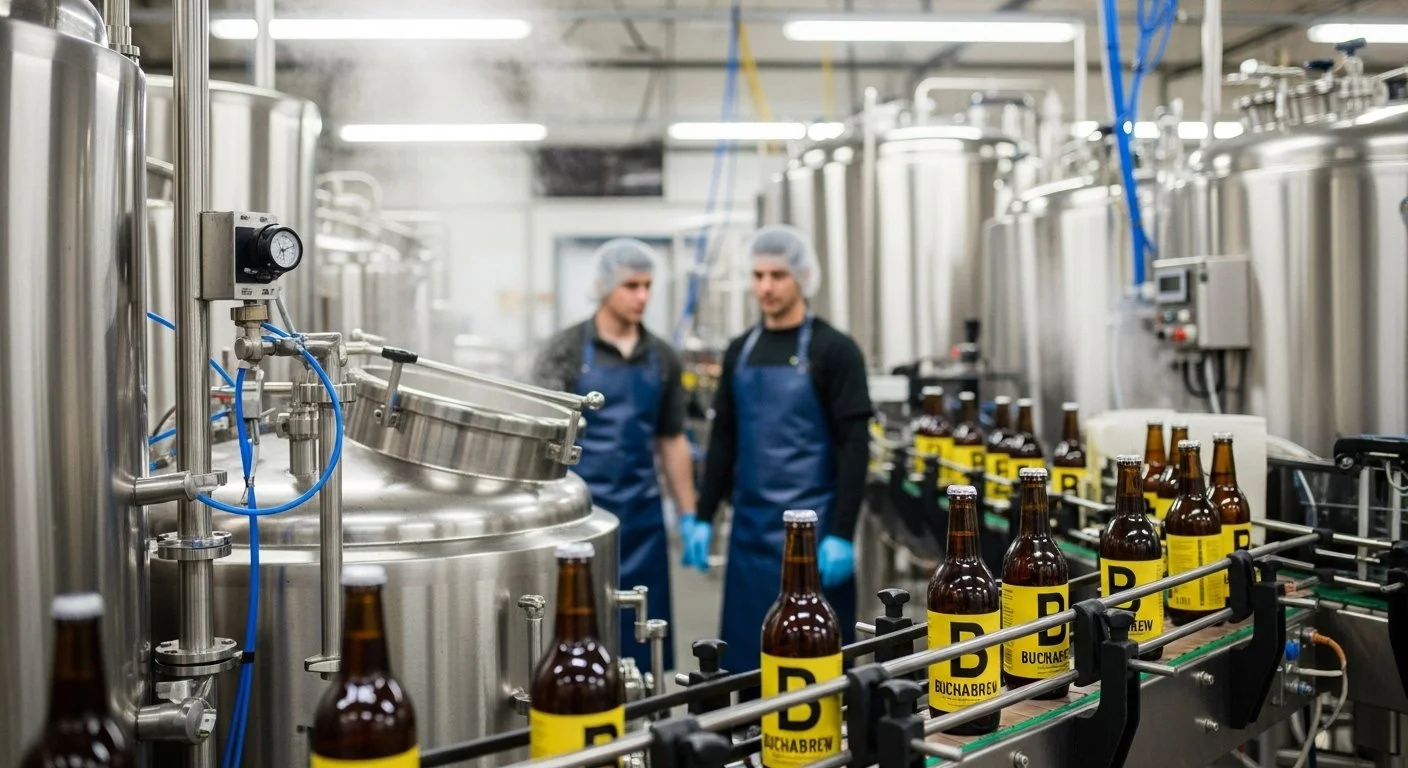
This is where kombucha production scales in a fundamentally different way. Instead of fermenting from scratch every time, you start with a certified, pre-fermented base that's already acidified, microbiologically stable, and ready to blend.
Pre-fermented bases compress your production cycle from 10–14 days down to 1–2 days. You're not cutting corners. You're offloading the fermentation phase to a specialist producer who's doing it at scale, with full traceability and compliance built in.
From Fermentation to Formulation: The Process Shift
A pre-fermented kombucha base is produced through controlled fermentation under food-grade conditions. It arrives shelf-stable, with consistent pH, acidity, and flavour. You blend it with your own tea infusions, botanicals, or juice concentrates to create your final product.
The fermentation is complete. What you're doing is formulation, not fermentation. That distinction matters—for production speed, regulatory simplicity, and capital efficiency.
5x Capacity Without New Equipment
When fermentation is no longer your bottleneck, your tank capacity multiplies. A 500L tank that once produced one batch every 10 days can now turn over every 2 days. That's a 5x capacity increase without adding equipment.
For a producer currently making 200L per week, switching to pre-fermented bases could mean:
1,000L per week using the same tanks
Faster response time to retailer orders or seasonal demand spikes
Reduced labour costs (no daily SCOBY monitoring, pH adjustments, or contamination risk)
Simpler compliance (certified bases simplify HACCP documentation and supplier audits)
Pre-fermented bases also solve one of the hardest problems in kombucha production: batch consistency. Fermentation is inherently variable. Temperature shifts, SCOBY vitality, and slight recipe deviations all affect the end result. When you're scaling to retail, that inconsistency creates quality complaints, failed audits, and buyer hesitation.
A certified base removes that variability. Every batch starts from the same microbiological and chemical baseline, which means your finished product is predictable—something retailers and compliance teams care about deeply. We cover this in detail in our post on the hidden costs of inconsistent kombucha production.
Full Flavour Control, Zero Fermentation Risk
You retain full control over flavour, branding, and formulation. The base provides the kombucha character - the acidity, the slight effervescence, the fermented complexity. You add the personality: hibiscus and ginger, elderflower and lemon, turmeric and black pepper. Whatever your signature is, it stays yours.
The difference is you're building it in days, not weeks. And you're doing it without the risk of a contaminated batch wiping out two weeks of production and thousands in lost revenue.
One of the biggest concerns for scaling producers is alcohol content. Traditional fermentation can drift unpredictably, putting you at risk of breaching the 0.5% ABV threshold. Our pre-fermented bases are engineered to stay reliably below that limit - our Organic Green Tea base keeps finished products under 0.025% ABV, while our Black Tea base stays below 0.04% ABV.
With 40 years of fermentation science behind us and over 1,000 formulations in market, we've helped brands scale kombucha production from sub-500L per month to multi-tonne operations - without the traditional capex burden. Our certified bases meet SQF, Organic, Kosher, and Halal standards, which means they integrate seamlessly into retailer-facing supply chains.
If your growth plan depends on speed and reliability, pre-fermented bases aren't a shortcut. They're a smarter infrastructure. Explore our full range of fermented beverage solutions to see what's possible for your operation.
When Co-Packing Accelerates Your Market Entry
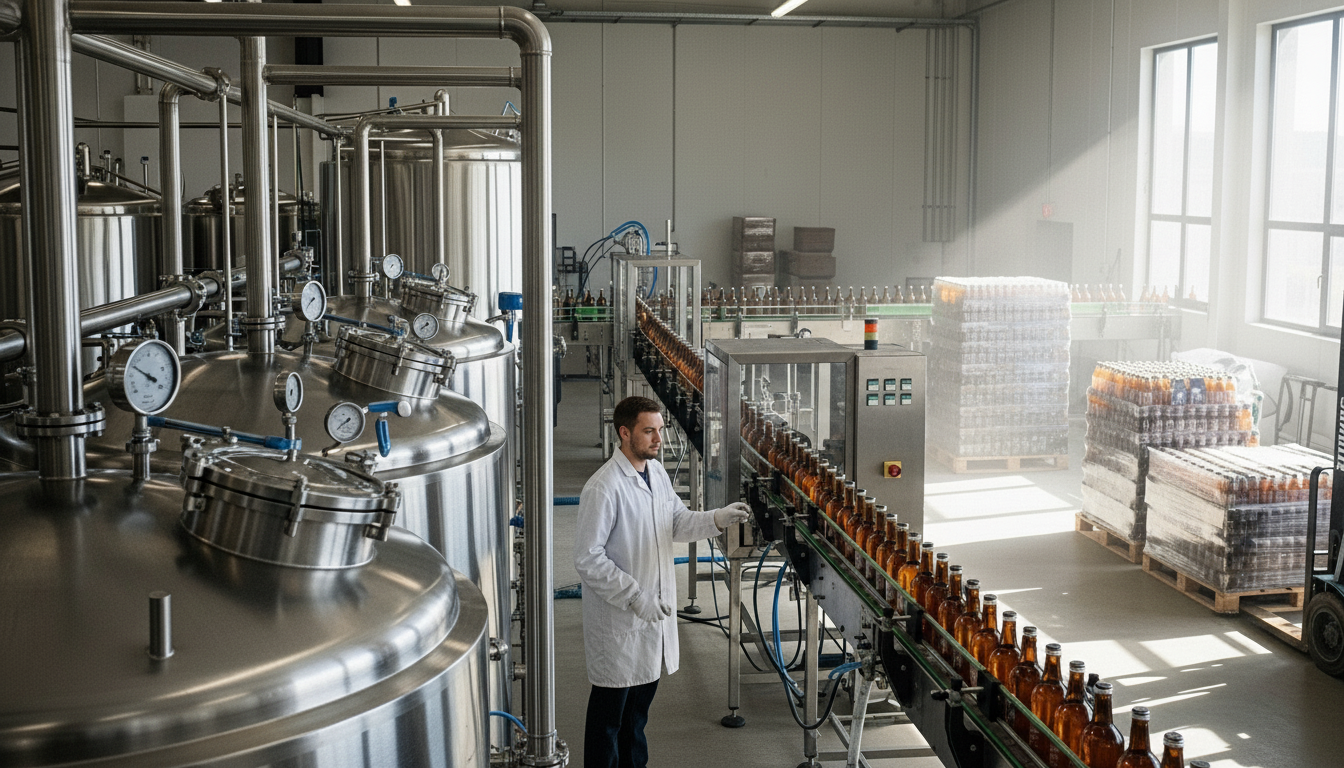
If demand is outpacing your ability to produce - even with optimised cycles or pre-fermented bases - co-packing offers a third option. You're outsourcing production entirely to a licensed facility that handles fermentation, blending, bottling, and packaging.
Co-packing works well when:
Your brand is scaling faster than your facility can support
You're entering new regions and need localised production to reduce logistics costs
Capital is better deployed in marketing, distribution, or product development
You want to test new SKUs or formats without committing to in-house production capacity
The trade-off is control. You're relying on a third party for quality, timing, and formulation consistency. That relationship needs managing carefully - optimising your recipe for co-packing ensures you get the results you need while protecting your brand's integrity.
For brands focused on market expansion rather than in-house production mastery, co-packing can save both time and money while giving you the flexibility to scale rapidly across multiple markets.
Ready to explore co‑packing for your brand? - Explore our beverage co‑packing support
Choosing Your Path to 1000L+ Production
Choosing between optimisation, pre-fermented bases, and co-packing isn't one-size-fits-all. It depends on your current capacity, capital availability, brand positioning, and where you want to be in 12 months.
What's certain is this: scaling kombucha production no longer requires six-figure equipment investments. The infrastructure is already available. The question is whether you're building it in-house or leveraging what's already proven.
If you're hitting roadblocks—whether it's inconsistent batches, slow fermentation cycles, or alcohol control issues - start with our Kombucha Troubleshooting Guide. It's a free resource that systematically addresses the most common production challenges holding brands back from scaling efficiently.
And if you're ready to explore how pre-fermented bases could unlock your next growth stage - without the capex or lead times - our team can walk you through what's possible for your operation.
Get in touch with our team to see how certified kombucha bases support faster, leaner scaling.
Frequently Asked Questions
-
Yes. Our bases hold full organic certification, which means they integrate directly into organic production systems without compromising your own certification status.
-
Absolutely, if you approach it correctly. Quality degradation during scaling typically comes from batch inconsistency (fermentation variability at larger volumes), process shortcuts (rushing to meet demand), or ingredient compromises (cheaper inputs to hit margin targets). Using pre-fermented bases actually improves consistency compared to managing multiple large fermentation vessels. Co-packing with quality partners maintains standards. The key is not letting growth pressure compromise the processes that made your product great initially.
-
Brand identity lives in flavour profiles, ingredient selection, packaging design, and customer experience more than fermentation location. Many successful kombucha brands (including several with eight-figure annual revenue) use pre-fermented bases or co-packing whilst maintaining fiercely loyal customer bases. The keys are maintaining quality standards, transparent communication about your production approach (if it aligns with brand values), and ensuring finishing steps (flavouring, sweetening, carbonation) remain differentiated and proprietary.
-
Buying capacity based on optimistic projections instead of actual demand. Many brands purchase 5,000L+ of fermentation capacity assuming they'll "grow into it," then struggle with underutilisation, cash tied up in idle assets, and labour costs that don't scale down when demand disappoints. Smarter approach: scale incrementally using flexible models (bases, co-packing, process optimisation) until demand consistently exceeds capacity for 3-6 months. Then consider permanent CAPEX investments once you have confidence in sustained volume.