Non-Alcoholic Beverage Trends: What the Consumption Shift Means for Brands and Manufacturers
Non-Alcoholic Beverage Trends in 2026: More Than a Category Spike.
Non-alcoholic beverage trends are no longer moving in one direction. Functional complexity, mindful drinking behaviour, clean label demands, and structural declines in alcohol volume are all converging on the same shelf at the same time. For beverage manufacturers, that convergence is a formulation brief.
The brands capturing share aren't waiting for the category to settle. They're engineering liquids that fit the way people actually drink now: less alcohol, more function, and far less tolerance for products that don't deliver on both. As we outlined in our Global Kombucha Report, the novelty phase is over. What follows is a more demanding market, and a bigger opportunity for the manufacturers who understand it.
Here's what the data tells us. For the full data behind the market shift, download our No and Low Alcohol Report 2026.
Non-Alcoholic Beverage Market Trends 2026: A $46.5bn Opportunity
If you need a reason to invest aggressively in your Non-Alc pipeline, look at the valuation. The global low and no-alcohol market is projected to hit USD 46.5 billion by 2034.
This isn't a future forecast. It’s happening on the shelf right now. Retailers are seeing immediate returns, with major grocers like Waitrose reporting a 32% surge in no/low sales in just a single summer.
Global alcohol volumes are projected to decline by -0.4% in 2025, with wine taking the hardest hit at -2.4%. The Ready-to-Drink (RTD) category is absorbing this volume.
This is where the money is moving. Retailers are actively looking for functional, sophisticated liquids to fill the gap left by shrinking wine and beer sections. The manufacturers who understand functional beverage production and can deliver a complex, shelf-stable adult beverage will capture this volume. If you're building or reformulating a no/low product, our no and low alcohol ingredient solutions are designed to help you compete in this category from day one.
Non-Alcoholic Sparkling Drink Trends 2026
Sparkling non-alcoholic drinks are the fastest-growing format within the no/low category — and the data reflects it. Consumers who might have reached for prosecco or sparkling wine at social occasions are now looking for sophisticated carbonated alternatives that deliver the same theatre without the ABV.
The winning formula in this segment is less about mimicry and more about elevation. The brands capturing share aren't producing flat replicas of Champagne. They're actually building entirely new flavour profiles around natural carbonation, fermentation-derived complexity, and functional benefits. Take botanical sparkling drinks, naturally fermented kombucha-based sodas, and adaptogen-infused sparkling waters. They're all outperforming traditional non-alc beer in rate-of-sale at premium retail.
For manufacturers, the opportunity is in the base. A long-fermented, naturally acidic base gives you the mouthfeel and complexity that carbonation alone can't deliver. On top of that, you get the functional credentials that position you above the sparkling water tier.
Non-Alcoholic Wine Market Trends 2026
Non-alcoholic wine market trends in 2026 tell a story of a category finally catching up with its promise.
For years, weak mouthfeel, artificial sweetness, and a finish that never quite arrived meant most options failed to hold their shelf position beyond the first range review. That's changing. LVMH's investment in French Bloom is a strong signal that luxury-tier non-alcoholic wine is now a real commercial category.
Wine drinkers are the most flavour-sophisticated segment in the no/low market. They aren't satisfied with sweetness masking absence. They want tannin, acidity, and length. They need those sensory markers that signal quality.
For manufacturers, the lesson is direct. What wine drinkers are looking for is exactly what long fermentation produces. The natural acidity, the acetic bite, the layered organoleptic profile — these aren't effects you can engineer synthetically. They're the output of a process. And they're why fermentation-forward formats are winning where grape juice-based alternatives keep losing."
Functional Ingredient Trends: Why "Just Hydration" Isn't Enough
The modern consumer is efficient. They want more than a drink. They want a tool.
This demand has birthed the biggest trend of the decade: Function Stacking.
Consumers are increasingly looking for beverages that do double (or triple) duty. They aren't looking for a standard Non-Alc beer. They want one with added electrolytes for recovery. They don't want a simple soda. They want gut-health benefits combined with a caffeine kick.
For R&D teams, this presents a unique challenge. How do you stack functional ingredients – adaptogens, nootropics, vitamins – without it feeling like you've created a chemical soup?
The Solution: The Fermentation "Cheat Code"
This is where a robust fermented base becomes your R&D superpower. Fermented bases are the cheat code for creating legitimate, sessionable drinks that compete on taste.
Our Organic Green Tea Fermented Base acts as a bio-available delivery system. It gives you the "base layer" of gut health (acetic and gluconic acids) that consumers already trust. This creates a halo effect for whatever other function you stack on top.
Takeaway: Don't formulate in a vacuum. Start with a base that carries its own weight in functional claims.
Mocktail and Mindful Drinking Trends: The Rise of the Zebra Striper
Forget the binary of "drinker" vs. "non-drinker". The most exciting demographic for 2026 is the Zebra Striper – the consumer who alternates between full-strength alcohol and Non-Alc options throughout a single night.
The data confirms the scale of this shift: 78% of Gen Z now actively alternate between alcoholic and non-alcoholic rounds to pace their night. This behaviour isn't driven by abstinence. It's driven by longevity. They want to stay at the party longer without the hangover.
What this means for formulation:
You can't serve these drinkers sugar-water. They're switching from a complex IPA or a tannic Pinot Noir to your beverage. If your mouthfeel is thin or your organoleptic profile is one-note, you lose them.
To win the Zebra Striper, you need complexity. You need the "burn," the tannin, and the length that only fermentation can provide. Using a long-aged base, such as our Organic Black Tea Fermented Base, mimics the complexity of alcohol – specifically the acetic bite that signals "adult beverage" to the brain – without the ABV.
What Is Mindful Drinking and Why It Matters for Manufacturers
Mindful drinking is a conscious, deliberate approach to alcohol consumption. People choosing to drink less, more selectively, and with greater awareness of when and why. It's separate from sobriety, and that distinction matters commercially.
The mindful drinker still drinks. But they're making active choices about every occasion, and non-alcoholic options are increasingly winning those moments. Research suggests the mindful drinking movement now spans well beyond Gen Z, with 35 to 50 year olds quietly restructuring their consumption without making it an identity statement.
So what does this mean for formulation? A consumer making that kind of considered choice won't accept a compromise product. They're stepping away from a glass of wine or a craft beer. Whatever replaces it has to earn that occasion on its own terms, with genuine mouthfeel, flavour complexity, and a sensory profile that signals quality.
Fermentation answers that brief directly. A long-fermented base delivers natural acidity, layered flavour compounds, and the organoleptic depth that tells a discerning palate this is worth choosing. That's why fermentation-forward formats are consistently outperforming synthetically acidified alternatives in mindful drinking occasions at premium retail.
The mindful drinker is one of the most commercially durable consumers in this category. They're habitual, they're quality-led, and they're not going back. Formulating for them isn't a niche play. It's where the repeat purchase is.
Non-Alcoholic Beer and Spirits Trends: Who's Winning and Why
If you want to know where the market is going, look at who's winning. The landscape is splitting into two camps: the Titans buying their way in, and the Challengers innovating on function.
The Titans (Validation):
When Diageo acquires a brand like Ritual Zero Proof (as they did in 2024), it signals that the world's biggest spirits company knows the future is alcohol-free. Similarly, LVMH investing in French Bloom proves that even the luxury sector demands Non-Alc options.
The Challengers (Inspiration):
The real R&D inspiration comes from the brands building on function rather than flavour mimicry:
Aplós: This functional spirit brand recently secured $5M in funding after hitting +400% growth. Their success came from leaning heavily into "functional spirits" that offer a mood-altering effect (using hemp and adaptogens) rather than attempting to taste exactly like gin.
Three Spirit: Their "Nightcap" drink is designed specifically for relaxation, using valerian root and lemon balm. They aren't selling a fake whisky. They're selling a feeling.
Athletic Brewing: They proved that if the product tastes authentic, the scale will follow. They're dominating the Non-Alc beer segment because they refused to compromise on the brewing process.
The Lesson: The winners are those who offer a genuine "adult" experience – whether through complex fermentation or functional benefits.
Clean Label 2.0: The UPF Backlash
2026 is the year that many more consumers are turning their back on ultra processed foods (UPF).
Consumers are waging war on long ingredient lists. They're scrutinising labels for gums, stabilisers, and synthetic acids. The "Clean Label" movement has evolved from a preference to a hard requirement for Tier 1 retail listings.
Fermentation as the Antidote
Fermentation is the ultimate clean label story. It allows you to replace synthetic preservatives and flavour enhancers with a natural process.
When you acidify your beverage with a fermented kombucha base rather than lab-created phosphoric or citric acid, you change the narrative. You aren't simply changing the pH. You get to put "Naturally Fermented" on the front of the can – a claim that neutralises the "processed" stigma.
For brands navigating the complex landscape of quality and safety assurance, fermentation provides a clear path to compliance.
Scale or Fail: The Velocity Trap
Here's the hard truth we discuss in the Kombucha Report 2026: Demand is spiking, but retail patience is thinning.
When a major retailer (think Whole Foods or Target) validates the Non-Alc trend, they demand volume immediately. We're seeing brands win the listing but lose the war because they can't scale production fast enough to meet velocity requirements.
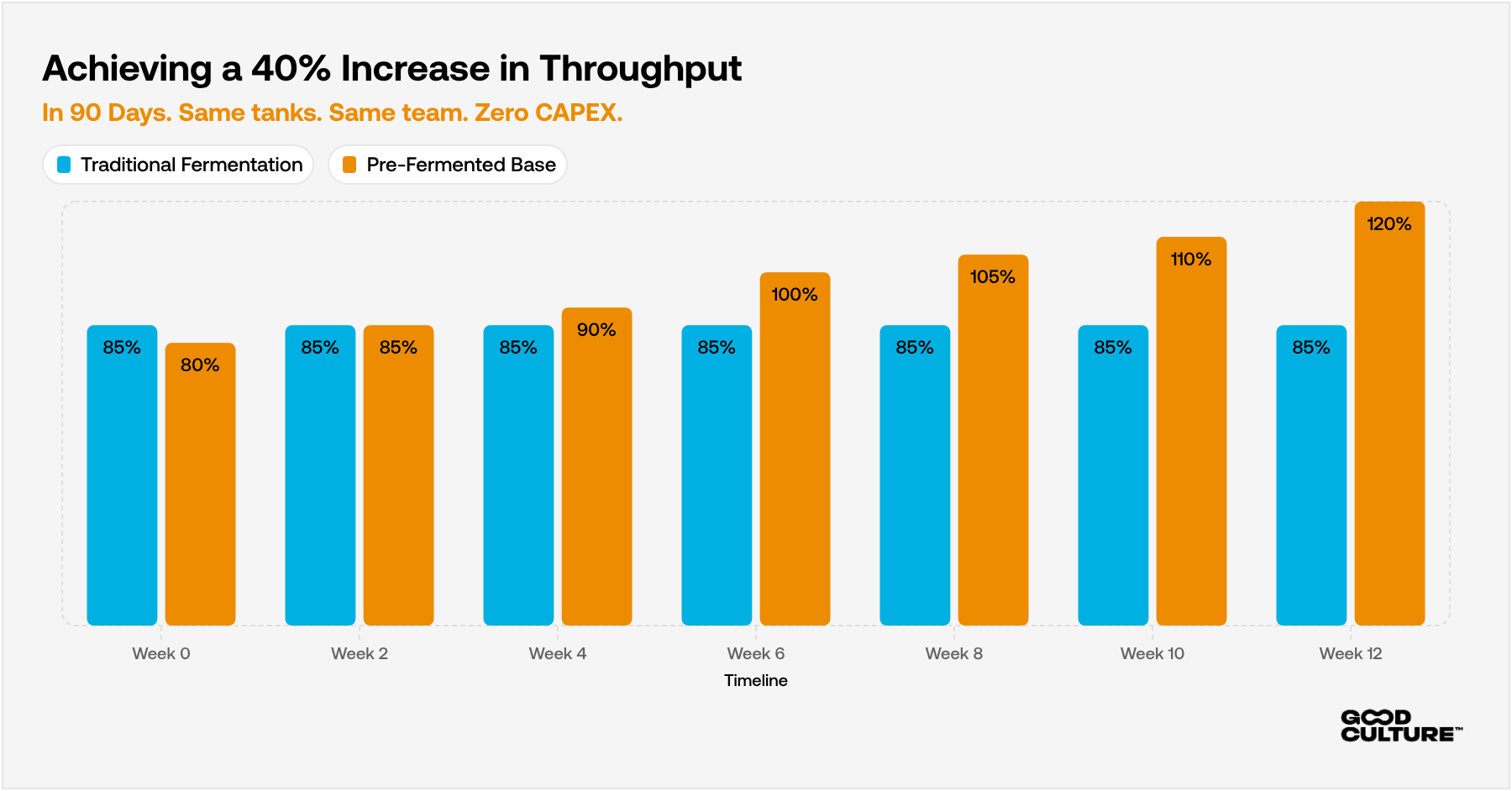
Traditional brewing cycles that last a long time are a bottleneck that kills momentum.
This is why we advocate for elastic capacity. By using a high strength, long aged ingredient like our bases, you reduce lead times from weeks to 24 hours. You aren't waiting on yeast. You're compounding and bottling.
If you're currently facing production bottlenecks, read our guide to beverage contract manufacturing to understand your options without committing to capital expenditure.
Ready to Optimise Your No/Low Range?
Today's non-alcoholic beverage trends demand beverages that are functional, complex, and clean. The volume opportunity is real, but only for those who can scale quality. For the full breakdown on where the market is heading, read our Global Kombucha Report. Or, if you want to discuss how these trends fit your formulation strategy, contact our team. Let's make sure your next launch is built to hold its shelf position.
Frequently Asked Questions
What are the main non-alcoholic beverage trends right now?
The most significant trends are functional ingredient stacking, clean label formulation, the growth of sparkling and fermented formats, and the rise of mindful drinking behaviour. Consumers want beverages that deliver genuine sensory complexity and functional benefit, not just the absence of alcohol. For manufacturers, formulation decisions made upstream have a direct impact on retail performance downstream.
What is mindful drinking?
Mindful drinking describes a conscious approach to alcohol consumption, choosing to drink less, more deliberately, and with greater awareness of when and why. It's distinct from full sobriety: mindful drinkers still consume alcohol but actively choose non-alcoholic alternatives in certain occasions. The movement is driving sustained demand for high-quality no/low products that hold their own in adult drinking occasions.
Why is the non-alcoholic beverage market growing so quickly?
Several factors are converging: declining overall alcohol volumes, rising consumer interest in functional health benefits, clean label requirements from Tier 1 retailers, and the emergence of habitual no/low consumers rather than occasional abstainers. The global low and no-alcohol market is projected to reach USD 46.5 billion by 2034, with premium and fermented formats among the fastest-growing segments.
What makes a non-alcoholic drink perform well at retail?
Retail buyers look for products that hold shelf position beyond the first range review, which means genuine repeat purchase rather than novelty. Products achieving this consistently offer complex mouthfeel, functional credentials, and a clean label. Fermentation-derived bases are increasingly the differentiating factor, providing natural acidity and depth that synthetically acidified alternatives can't replicate.
How does fermentation support no/low product development?
Fermentation produces natural acidity, complex flavour compounds, and a mouthfeel that signals quality without requiring alcohol. It also supports a clean label story, replacing synthetic preservatives and acidifiers with a natural process. For brands developing no/low products, a long-fermented base reduces R&D complexity and lowers the risk of the flavour compromises that typically lead to early de-listing.