
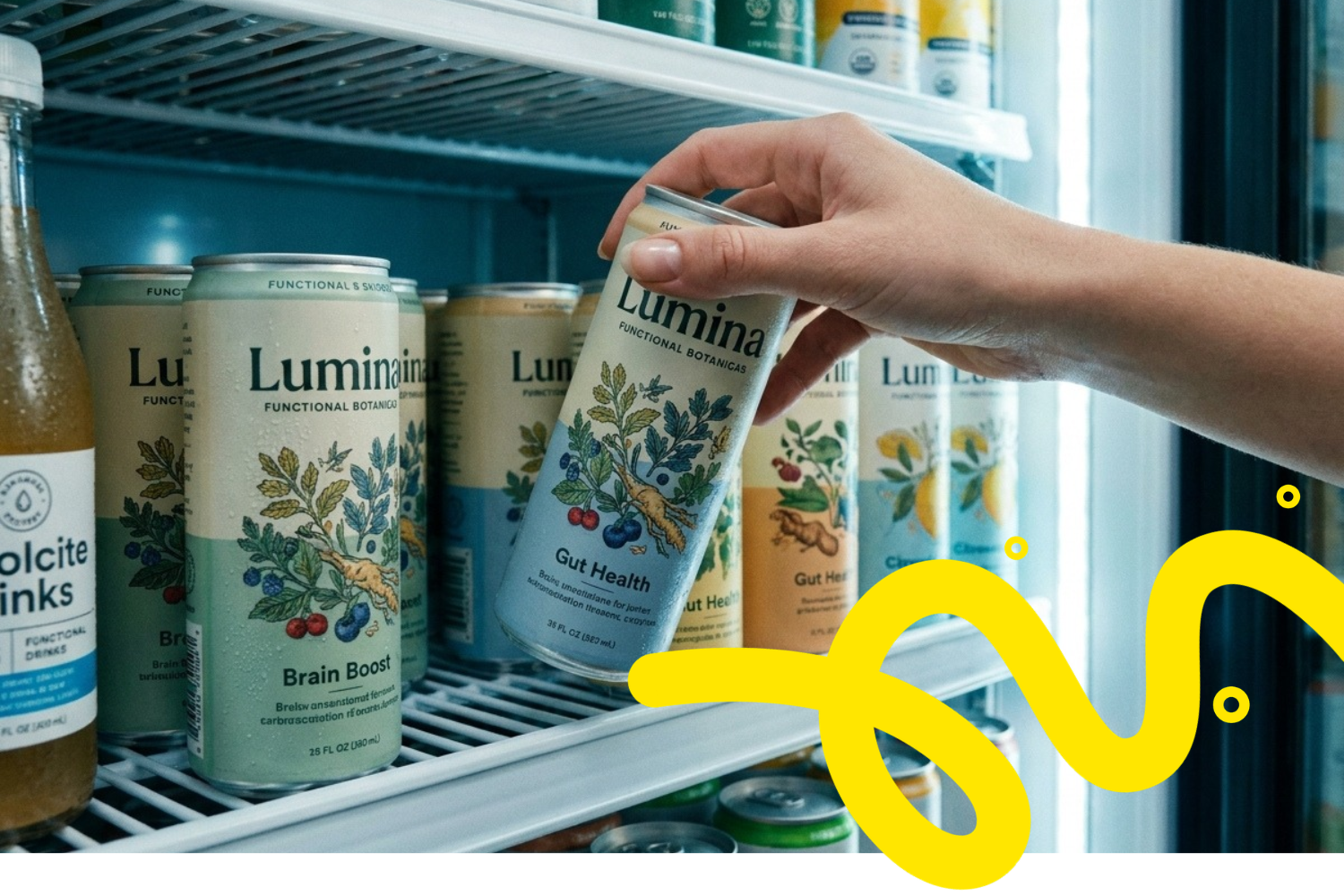
Poppi started as a homemade apple cider vinegar drink sold at a Dallas farmers' market. In 2025, PepsiCo agreed to buy it for $1.95 billion.
Most brands won't follow that exact path. But the route Poppi took is open to anyone with a clear idea and a good plan. The global functional beverages market is worth $213.7 billion and heading for $300 billion by the end of the decade, as our Producer's Guide to Functional Beverages shows. That's a lot of room for new names.
If you're working out how to start a functional beverage brand, this roadmap takes you through each step. It runs from your first conversation with a shopper to your first pallet on a truck, wherever in the world you plan to sell.
Step 1: Get to Know the People You're Selling To
Every good functional drink starts with a person, a moment and a need. Before you mix anything, find out who'll drink it, when they'll drink it and what's missing from the drinks they buy now.
The best way to find out is to ask. Use short surveys, social media polls and small tasting groups. Chat to people at the gym, in the office or at a market stall. Ask what they drink today, what they'd change and what they'd pay. People are surprisingly open when they're asked to help shape something new.
Wider consumer research helps too. Innova Market Insights found that 39% of consumers want products that help them maintain steady energy, and 38% are interested in fermentation for digestive health. Those are the kinds of needs a new drink can be built around.
Aim to describe your drinker in one line. For example: "Office workers in their thirties who want an afternoon lift without the crash of a full-sugar energy drink." Write it down. You'll test every later decision against it.
Step 2: Decide What Makes Your Functional Drink Different
Shoppers have more choice than ever, so give them a clear reason to pick yours. That reason usually comes from three things: taste, function and story.
Taste decides whether people come back. A drink that tastes medicinal rarely gets a second try, however good the benefit. Function gives people a reason to try it in the first place. And story makes it memorable.
Health-Ade shows how that combination can grow. It started out selling kombucha at a Los Angeles farmers' market in 2012. Today its retail sales are approaching $250 million a year, it's sold in more than 65,000 US outlets, and it was bought by Generous Brands in 2025.
Pick one benefit and make it yours. A drink that tries to do five things is hard to explain on a crowded shelf.
Step 3: Check Which Health Claims You Can Make in Each Market
This step is often left too late, and it can undo months of work. Claim rules vary a lot around the world, so check them for every market you plan to sell in before you lock the recipe.
United States. Food makers can use structure/function claims, such as "supports healthy digestion", without FDA approval or notification. But the claim still needs to be accurate, and class actions over misleading claims are common.
UK and EU. Health claims must be authorised before use. No probiotic claim has been approved, so even the word "probiotic" on a label is treated as an unauthorised health claim.
Japan. Most functional drinks use the Foods with Function Claims system. Brands must notify the Consumer Affairs Agency of their safety and scientific evidence before the product goes on sale.
The US route looks simpler, but it carries its own risk. In 2025, Poppi agreed an $8.9 million class action settlement over its gut health claims. The case argued that the fibre in each can was too low to deliver the benefit implied.
Sometimes the answer is to build the drink around an ingredient with a clear, permitted claim, such as a vitamin. Sometimes it's to lead with flavour and ingredients and let the function support the story.
Step 4: Choose How You'll Make Your Drink
Most new brands don't build a factory. They work with a co-packer, also called a contract manufacturer, which produces and packs the drink to their recipe. It keeps start-up costs down and lets you test the market before you commit to big volumes.
When you speak to co-packers, ask:
What are your minimum order quantities? Your first run needs to match the volume you can realistically sell.
Which formats can you fill? Cans, glass, PET and pouches all need different lines.
Where are you based? A co-packer close to your main market cuts shipping costs and lead times.
Which certifications do you hold? Most retailers expect a GFSI-recognised scheme, such as SQF or BRCGS.
Can you grow with us? Moving co-packer mid-launch is costly, so check there's room to scale.
If you don't have a production partner yet, our co-packing network can match your recipe to a manufacturer that already works with our ingredients.
Step 5: Develop the Recipe and Source Your Ingredients
Now it's time to turn the idea into liquid.
If you don't have an in-house development team, a flavour developer can help. Ask what similar drinks they've worked on and whether they can share examples. Our own flavour and product development team works with brands from first brief to final recipe.
Expect the functional ingredients to be the hardest part. Many of them taste bitter, earthy or metallic on their own. A good recipe balances them with acidity, body and enough flavour to carry them, often with less sugar than a traditional soft drink.
Your ingredient suppliers matter just as much. Choose suppliers with GFSI certification, and ask each one for a product specification and a certificate of analysis. Think about the claims you want on pack, such as Organic, Halal, Kosher or Vegan. Every ingredient in the drink needs to carry that same certification.
Then prove the shelf life. It decides where you can sell. One of our US partners had turned down 1,500 ambient distribution points because its drink needed a cold chain. After moving to a fermented base, its shelf life extended to 12 months and those doors opened up. We've gone deeper on recipe development in our guide to beverage product development.
How Fermented Ingredients Help New Brands Move Faster
Fermented ingredients have become a common building block for new functional drinks. They bring natural acidity, body and a layered flavour that helps balance functional ingredients without a long ingredient list. They also give a brand a simple, natural story that shoppers already understand from kombucha and kefir.
Our ready-to-blend fermented bases are used in more than 1,000 drinks worldwide, across kombucha, modern soda, energy drinks, wellness shots and RTD coffee. Each one is always below 0.5% ABV, organic certified and produced under SQF accreditation, with Kosher and Halal certification in place. That paperwork is ready for retail buyers in the US, Europe, the Middle East and Asia from day one.
Because the bases arrive fully fermented, brands and co-packers blend them straight into a recipe. There's no brewing step and no new equipment to buy. One co-packer's R&D team used our bases to develop, trial and validate a full kombucha range in six weeks. Many new brands start with our Organic Green Fermented Tea Base, which has a bright, clean profile that suits fruit-led drinks.

Step 6: Build a Brand Story People Remember
A brand is the product plus the story around it. Your story explains why the drink exists, who it's for and what it does for them. It shapes your name, your packaging, your social content and the pitch you make to buyers.
Remedy shows how far a clear story can travel. The brand launched its kombucha in Australia in 2012, when few people had heard of the drink. It built its name around naturally fermented, sugar-free drinks, and has since grown into the UK, Canada and the US. It's also branched out into energy drinks, wellness shots and soda.
Everything you learned in Step 1 feeds into this. Use it to brief your designer on what your brand is, what it isn't and how it should feel. Then stay consistent. The brands people love say the same thing, in the same voice, everywhere they show up.
Step 7: Plan Your Launch and Route to Market
Few brands launch everywhere at once. Most start small, prove that people buy the drink again, then use that data to win bigger listings.
Where you start depends on where you sell. As our Global Kombucha Report shows, 61% of kombucha volume in Europe is drunk in cafés, bars and restaurants, while nearly 60% of US kombucha sales go through mainstream supermarkets. Asia-Pacific is the fastest-growing region of all. So a launch plan for London may look very different from one for Los Angeles or Singapore.
Online sales can carry you when shelves can't. When COVID-19 delayed Poppi's in-store launch in 2020, the brand moved its focus to Amazon and online grocers. It's now stocked in Target, Kroger, Walmart and Whole Foods Market.
Brands are quickly figuring out that a strong first region beats a thin national launch. Retail buyers look closely at how fast a drink sells in the stores that already stock it. Prove that, and the next conversation gets much easier.
Start Building Your Functional Beverage Brand
Starting a functional beverage brand takes a clear drinker, a reason to choose you, claims you can legally make and a recipe that holds up on the shelf. Get those right early and the rest of the roadmap gets much easier to follow.
Planning your first functional drink? Our free Producer's Guide to Functional Beverages covers five growth trends, ten opportunity platforms and ten recipe concepts with exact ingredient quantities, production steps and shelf life notes.
Frequently Asked Questions
How do I start a functional beverage brand?
Start by defining who the drink is for and what benefit it offers. Then check which claims you can make in each market, choose a co-packer, develop and test the recipe, prove its shelf life and build a brand around it. Most new brands launch in one region first and grow from there.
Do I need my own factory to start a drinks brand?
No. Most new drinks brands use a co-packer, a contract manufacturer that produces and packs the drink to the brand's recipe. It keeps start-up costs low and lets a brand test the market before investing in its own equipment.
How do I find a co-packer for a functional drink?
Look for a manufacturer with experience in your format, the certifications your retailers expect and minimum runs that suit your volumes. Share your full specification early. Good Culture works with a global network of co-packers and can help match a recipe to the right one.
How do I make a fermented functional drink without brewing?
Use a ready-to-blend fermented base. The base arrives fully fermented, so a brand or co-packer simply blends it with water, sweetener, flavour and any functional ingredients. There's no brewing step, no fermentation equipment and no risk of the alcohol level rising in the bottle.
Can I call my drink probiotic?
It depends on the market. In the UK and EU, no probiotic health claim has been authorised, so "probiotic" on a label is treated as an unauthorised claim. In the US, structure/function claims are allowed without FDA approval but must be accurate. Take regulatory advice before using gut health language on pack.
Sources
The Daily Meal, "Where Is Mother (Poppi) From Shark Tank Today?": https://www.thedailymeal.com/1254846/mother-poppi-shark-tank-today
BevNET, "PepsiCo to Acquire Poppi in $1.95B Deal" (17 March 2025): https://www.bevnet.com/news/2025/pepsico-to-acquire-poppi-in-1-95b-deal
ConfectioneryNews, "Top 10 food and beverage trends set to shape 2027" (13 October 2026), reporting Innova Market Insights: https://www.confectionerynews.com/Article/2026/10/13/the-10-food-and-beverage-trends-set-to-shape-2027/
Business Wire, "Generous Brands to Acquire Health-Ade Kombucha" (22 July 2025): https://www.businesswire.com/news/home/20250722018506/en/Generous-Brands-to-Acquire-Health-Ade-Kombucha-Doubling-Down-on-Premium-High-Growth-Functional-Beverages
US Food and Drug Administration, Structure/Function Claims: https://www.fda.gov/food/nutrition-food-labeling-and-critical-foods/structurefunction-claims
Food Safety Authority of Ireland, Probiotic Health Claims: https://fsai.ie/Business-Advice/Nutrition/Probiotic-Health-Claims
ChemLinked, Health Food Regulatory System in Japan: https://food.chemlinked.com/foodpedia/health-food-regulatory-system-japan
Brewbound, "Poppi Reaches $8.9M Settlement Over Gut Health Claims" (19 March 2025): https://www.brewbound.com/news/poppi-reaches-8-9m-settlement-over-gut-health-claims
Food & Drink Business, "The rise of Remedy" (29 April 2025): https://www.foodanddrinkbusiness.com.au/news/the-rise-of-remedy