
How to Optimise Your Kombucha Recipe for Co-Packing
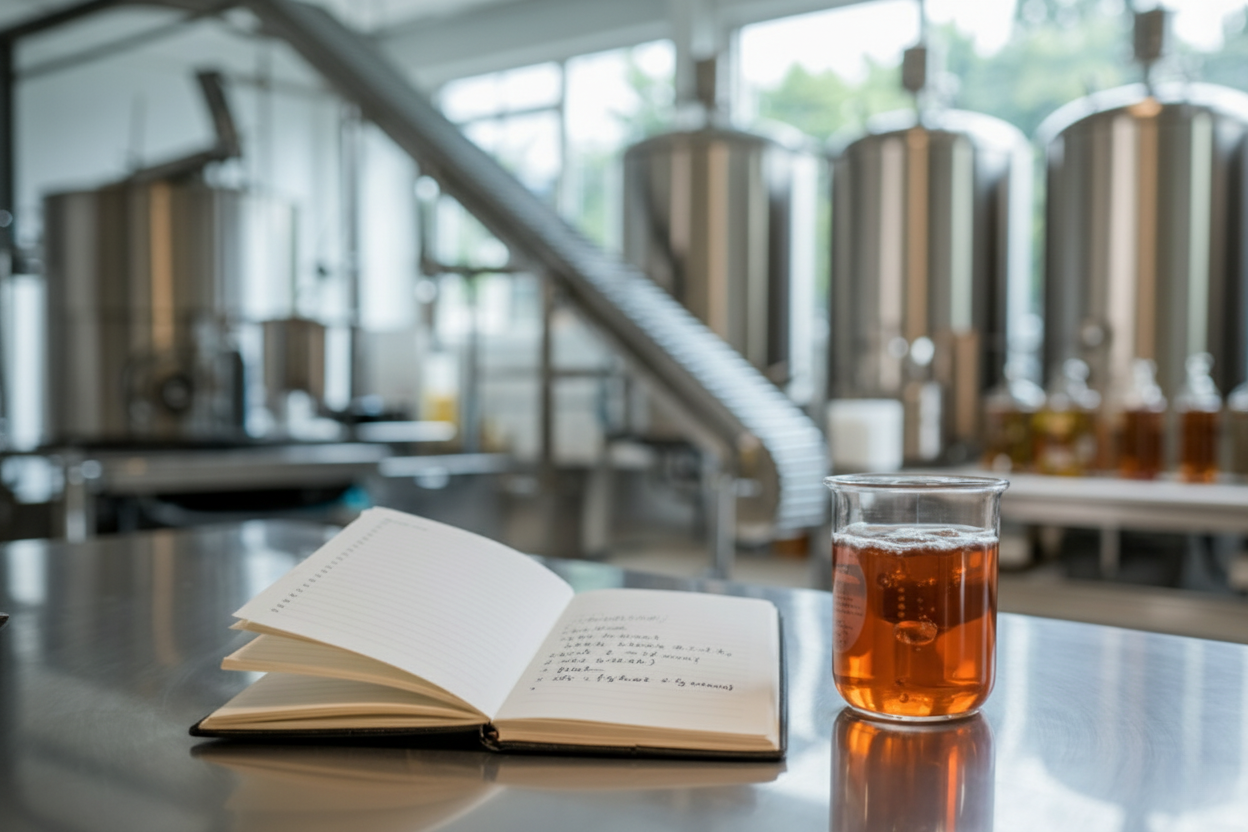
If your kombucha brand is starting to outgrow your own tanks, co‑packing is the obvious next step. The catch is that most “brew‑house recipes” aren’t ready to drop straight onto a co‑packer’s line.
This guide walks through how to make your recipe co‑packer‑ready – so serious kombucha co‑packers say yes, your costs stay under control, and you protect flavour, ABV and consistency as you scale.
Quick Answer: What Does a Co‑Packer‑Ready Kombucha Recipe Look Like?
To make a kombucha recipe work smoothly with a co‑packer, you need to:
Standardise your inputs. Use ingredients with clear specs, reliable suppliers and year‑round availability.
Simplify the recipe. Remove fragile, fiddly steps that don’t scale well. We’re talking about endless infusions, one‑off botanicals or complex last‑minute adjustments.
Design for stability. The best ingredients and processes will support shelf life, safe handling and predictable ABV.
Use a consistent kombucha base. Start from a base that behaves the same in every batch, rather than brewing everything from scratch at each site. That’s where companies like Good Culture come in.
Test scale‑up before you commit. Run lab or pilot trials that mimic co‑packer conditions, not just what works in your own brewery.
Why Your Kombucha Recipe May Have to Change for Co‑Packing
Co‑packers aren’t small breweries with spare tank time. They’re production environments made for throughput, food safety and line efficiency.
That reality has consequences for your recipe:
They work to their process, not yours. Your formulation has to fit their equipment, cleaning cycles and storage setups.
They prefer stable, standardised inputs. Every unusual ingredient or handling step is going to add risk, time and cost.
They expect repeatable behaviour. If your base wanders on ABV, acidity or foam, it quickly becomes a headache and a risk for everyone involved.
Re‑engineering your recipe for co‑packing is about meeting those constraints without losing what makes your kombucha authentically yours.
Step 1: Lock in Consistent Ingredients and Specs
The starting point is consistent ingredient sourcing. Variability that has that craft feel at 500 L will become chaos at 5,000 L.
You can focus on three things:
Specs, not just supplier names. Define your Brix ranges, acidity, particle size and microbiological limits for teas, juices and botanicals. Co‑packers need this level of detail to build their own QA checks.
Year‑round availability. Seasonal inputs like fresh ginger, fruits or herbs are much harder to manage at co‑packer scale. It’s usually better to move to frozen juices, concentrates or processed forms that keep quality consistent for your drinks across the seasons.
Certifications and documentation. Many co‑packers operate under schemes like BRC or SQF. Your ingredients need that matching paperwork – organic, kosher, halal, allergen statements. This will help to keep audits calm.
If you can’t guarantee the same ingredient, spec and paperwork every month for the next year, your co‑packer will struggle to guarantee the same product to your customers.
Step 2: Simplify the Recipe for Line Efficiency
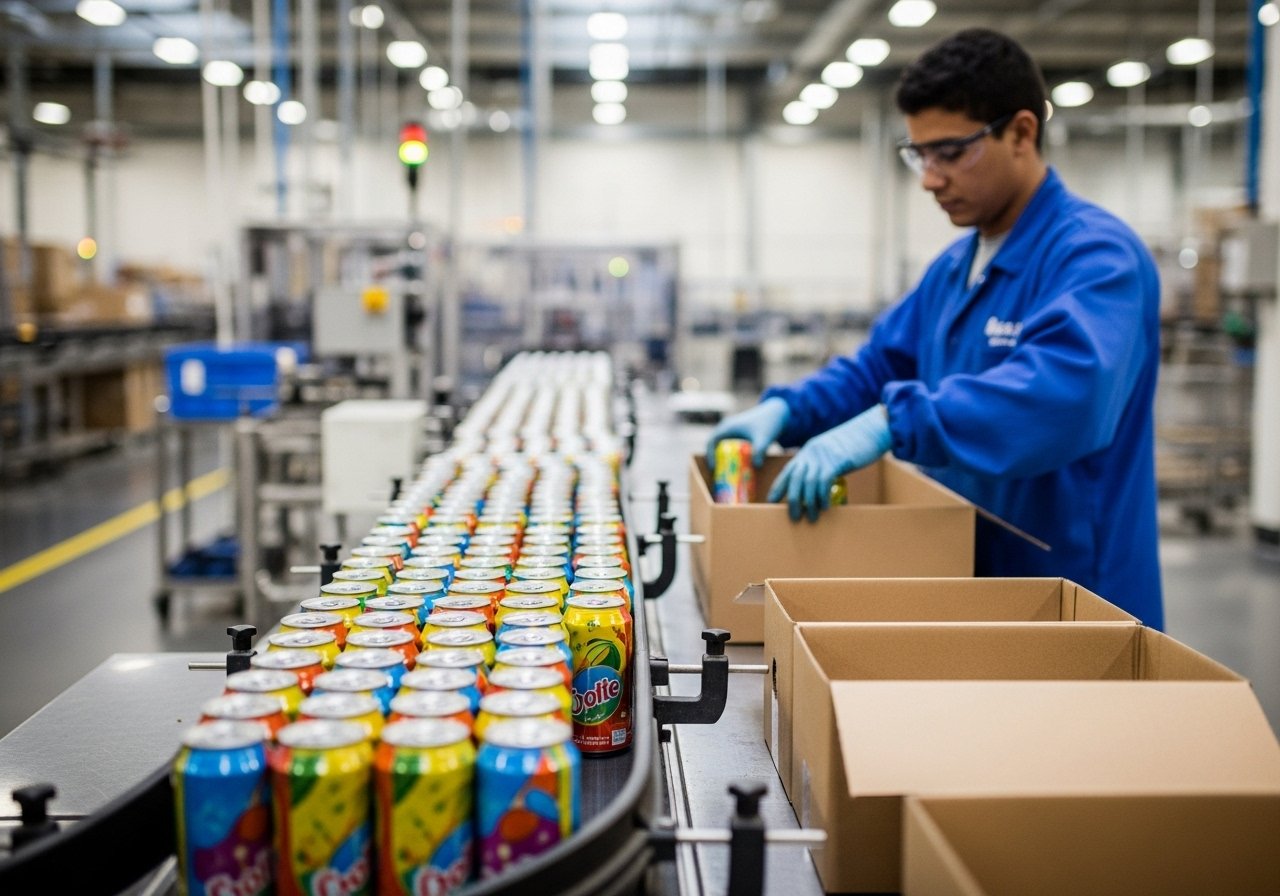
An intricate recipe might be beautiful in a small brewery. On a co‑packer’s line, it can turn into an expensive bottleneck.
Take a look at your current process and ask:
How many separate additions do we really need? Instead of 10 different herbs added at different stages, could you move to two or three well‑designed flavour components that deliver the same organoleptic profile?
Can we pre‑do any infusions upstream? For example, move complex tea or botanical infusions into a base, so the co‑packer only has to handle one consistent ingredient rather than four.
Which brew day rituals will break at scale? Tasting every tank and adjusting with sugar or acid by feel might work at 200 L. At 10,000 L, that can’t happen. You need defined targets and addition rates.
Most co‑packers want to blend and fill in the simplest, most cost‑effective way. The more you reduce steps and decisions, the more likely they are to quote. And that’ll make your margins look better.
Step 3: Design for Stability, Shelf Life and ABV Control
Stability is where many kombucha recipes fall down when they move into co‑packing.
Here’s three areas to tighten:
Microbial stability. Loosely-managed cultures can keep fermenting in pack, pushing ABV and CO₂ upwards. Co‑packers will push for controlled fermentations, defined cultures or pre‑fermented bases that have already done their work before the product hits their line.
Ingredient stability. Fresh purees, pulps and particulates can separate, oxidise or harbour spoilage organisms. Where possible, swap to forms that are easier to keep safe and consistent – aseptic juices, concentrates or stable flavour systems.
ABV management. Retailers and regulators have almost zero tolerance for kombucha drifting over 0.5% ABV. Designing your recipe and process for predictable alcohol behaviour is non‑negotiable once you start involving third‑party production.
Getting this right doesn’t just keep you out of trouble. It also reduces how much testing and firefighting your team and your co‑packer need to do every time a batch is released.
Step 4: Use a Consistent Kombucha Base Instead of Brewing Everything Onsite
Most kombucha co‑packers don’t want to brew live kombucha on their own site. It complicates hygiene, scheduling and ABV control.
A more co‑packer‑friendly model is:
Brew a high‑strength kombucha base under tightly controlled conditions (or source one that’s already engineered for this).
Ship the base to your co‑packer as a stable, spec’d ingredient.
Blend down with water, juices, flavours and sweeteners on the co‑packer’s line.
That approach gives you:
Predictable behaviour. The base is fermented to a defined endpoint, so flavour, acidity and alcohol are known before it hits the line.
Shorter, cleaner production runs. Co‑packers just blend and pack, rather than having to manage a multi‑day fermentation process.
Simpler scale‑up. Once the base is validated, increasing volume is mostly a question of more base and more line time – rather than reinventing the process.
It also makes it easier to maintain a consistent organoleptic profile across different co‑packers or regions if you’re running a multi‑site strategy.
Step 5: Test Scale‑Up Before You Commit to a Full Run
The final step in making your recipe co‑packer‑ready is testing under conditions that resemble your chosen plant – not just your existing pilot kit.
Before you lock anything in:
Run lab or pilot trials using the same ingredient formats and ratios you plan to use at scale – concentrates vs purees, pre‑fermented base vs in‑house brew, and so on.
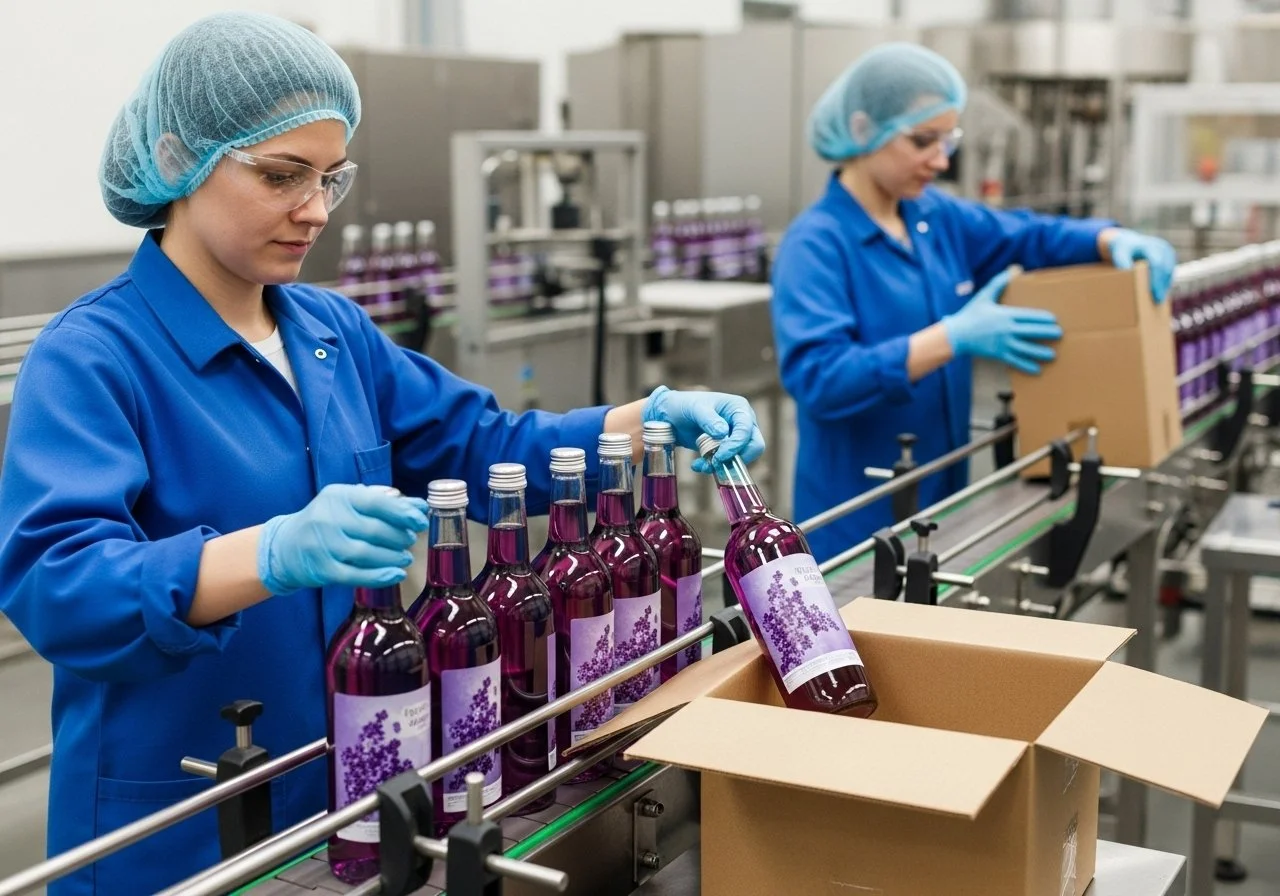
Measure ABV, pH, CO₂ and shelf life over time in the intended packaging (for example, cans vs bottles), not just in lab glassware.
Document everything. Go into co‑packer conversations with a clear technical pack: ingredient list, specs, process outline, critical limits and test data.
Arriving with a well‑tested, well-documented recipe dramatically increases confidence on both sides. And it usually shortens the path to your first commercial run.
FAQs: Getting Your Kombucha Ready for a Co‑Packer
-
Not necessarily. The goal is to change the way you deliver that profile, not the profile itself. That can often mean moving from fresh infusions to concentrates, or using a consistent kombucha base plus a smaller number of well‑defined flavour components.
-
At a minimum, you’ll need a full ingredient list, specs for key inputs, a defined process flow, target ranges for pH, ABV, CO₂ and Brix, plus any existing shelf‑life or lab data. The clearer this is, the easier it is for a potential kombucha co‑packer to quote and assess their risk.
-
Some can, but most expect you to arrive with a recipe that’s already close to production‑ready. That’s why it helps to do this optimisation work – or partner with a team who can support formulation, base selection and troubleshooting before you approach co‑packers.
-
Not if it’s done well. A high‑quality kombucha base is still a fermented product. It’s just one that’s been engineered for consistency and compliance at scale. For your customers, what matters most is taste, stability and trust.
Next Step: Make Your Recipe Co‑Packer‑Ready
If you’re reading this because you’re thinking about kombucha co‑packing, you’re at a pivotal point. The decisions you make about your recipe now will determine how easy (or painful) your next few years of growth feel.
Good Culture helps kombucha brands:
Audit existing recipes for co‑packer readiness.
Switch to stable, standardised kombucha bases.
Connect you with co‑packers who are a great fit