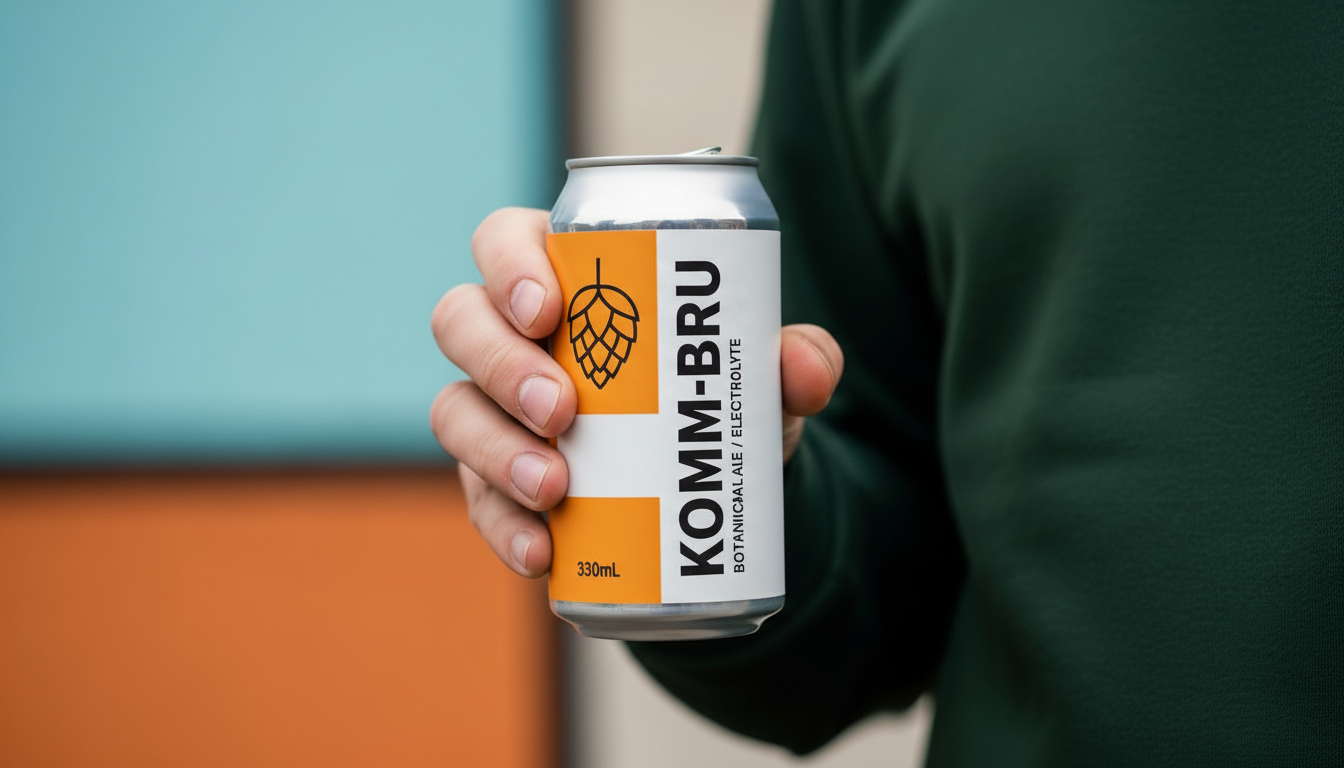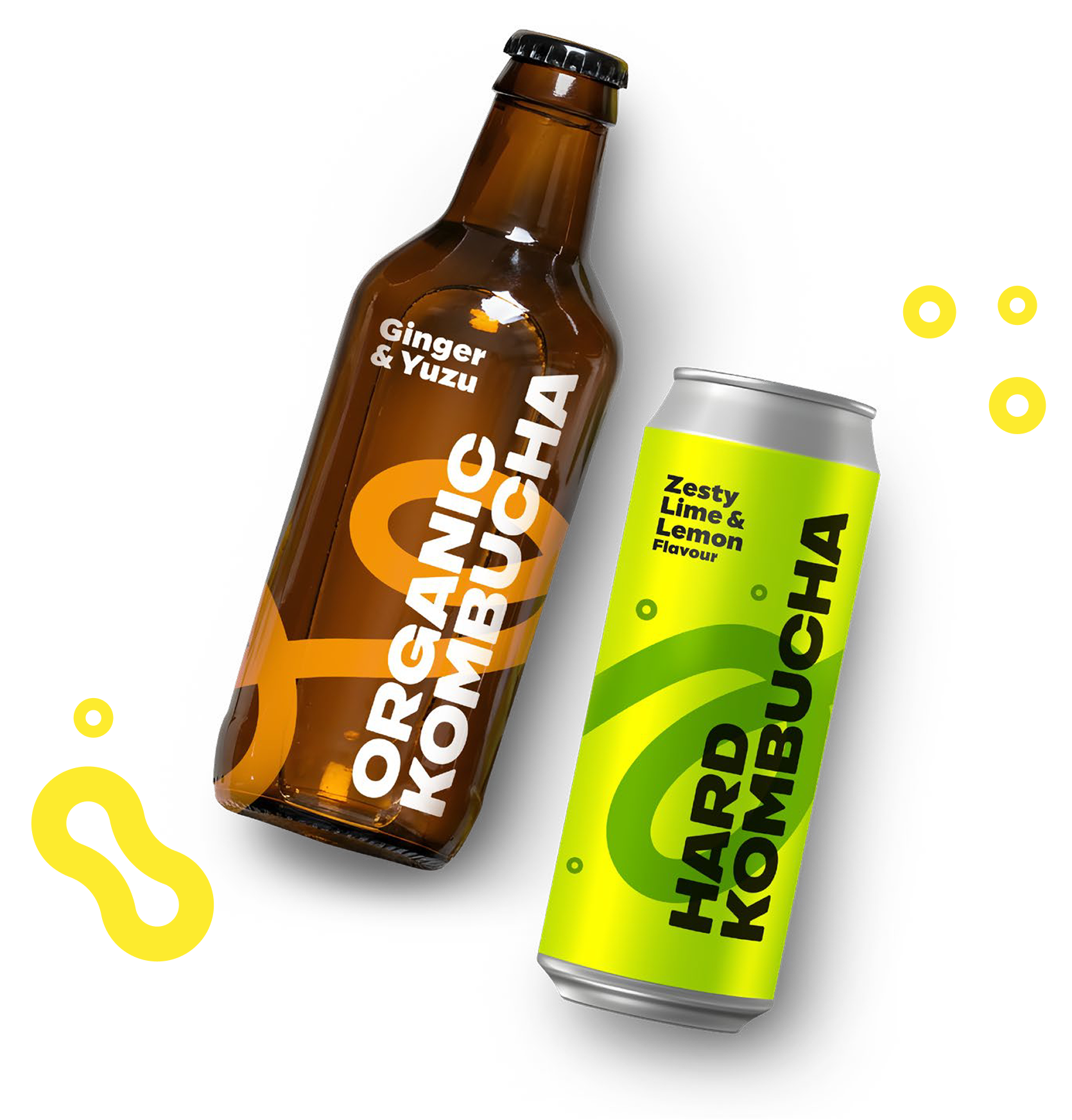
Kombucha: the Original Functional Beverage.
What began as a niche health drink has grown into a global favourite. As kombucha evolves, so do the possibilities, new flavours, new formats, new audiences. With the right foundation, brands can turn that potential into something remarkable.
Kombucha Market Trends: What's Driving Growth?
The kombucha market is forecast to surpass $10 billion by 2030, and the kombucha tea market specifically is one of the fastest-growing parts of functional drinks. That growth isn't evenly spread. The USA, Europe, and APAC are leading it, and functional innovation is the thing pulling each of those markets forward.
Consumers are more informed than they've ever been. They're reading labels, asking what's actually in the bottle, and looking for clean, functional ingredients rather than just a flavour they like. Current kombucha market trends point the same way for every region we track. None of this is slowing down. It's accelerating.
-
![Two bottles of organic kombucha probiotic drinks, one in a green can labeled 'Sparkling Apple & Lemon' and one in a clear plastic bottle labeled 'Sparkling Ginger & Lemon,' sit on a wooden surface with a brick wall and sink in the background.]()
Traditional
Raw, unpasteurised, closest to a home brew. Lives or dies on authenticity.
-
![A can of Sparkling Live Soda in Sicilian Orange flavor with a blue and orange design on the label. In the background, there is a halved orange, and some apples and bananas on a wooden surface.]()
Craft & Mainstream
Pasteurised or filtered for consistency, usually built on a pre-fermented base rather than a live tank.
-
![Two bottles of functional sparkling water with lemon and raspberry flavors placed on a white cloth, surrounded by half-cut lemons, raspberries, and mint leaves outdoors.]()
Sugar Free Ambient
Fully shelf-stable. No cold chain, no risk of a bottle fermenting harder in transit.
-
![Two cans of vitamin water, one flavored with mango & orange on the left and the other with apple & pear on the right, placed on a wooden table outdoors with a blurred garden background.]()
Hard Kombucha
3 to 7% ABV. Pulling a new drinker into the category entirely.

Get the Functional Beverages Guide — Free Download
Market intelligence. Formulation strategies. 10 ready-to-blend recipes. All in one free download.
Commercial Kombucha: How It's Manufactured at Scale
A SCOBY doesn't care about your production schedule. Sugar, tea, temperature, and time go in, and what comes out shifts depending on how all four behaved that week. In a 20-litre batch on a counter, that's part of the charm. At 2,000 litres on a delivery schedule, it's a different problem.
Alcohol drift is the one that catches people out most. Run fermentation too long or too warm and a batch creeps past the 0.5% line that keeps it classed as a soft drink, not something needing a different licence.
Batch inconsistency is the quieter problem. Nothing's technically wrong. It just doesn't taste quite like last month's, and customers notice even when they can't say why.
Neither means you're doing it wrong. It means you're working with something genuinely alive.
Where Kombucha Brands Can Win.
Winning in the kombucha space means more than crafting a great product. Successful brands combine operational consistency, creative innovation, and commercial savvy to stand out and grow in a dynamic market.
-
Kombucha bases are high-strength, long-aged and ready-to-blend fermented ingredients that eliminate batch variation in commercial production. They deliver consistent flavour, stable alcohol levels, and retail-ready certifications, so you can scale without reinventing your process or managing fermentation in-house.
-
A kombucha base that's already fermented and stabilised doesn't keep changing in the can the way live kombucha does. That means fewer rejected batches at QA, fewer products pulled near expiry, and a longer window to actually sell what you've made. For a kombucha manufacturer working with retailers on fixed shelf-life requirements, that stability is often the difference between getting listed and getting passed over.
-
A stable, consistent base gives you room to experiment with flavour without re-risking the fermentation itself. Blend it, infuse it, build a hard kombucha line on top of it, the foundation stays predictable even when the product on top of it doesn't. That's a different starting point to building every new SKU from a fresh live ferment and hoping it behaves the same way twice.
-
Fewer failed batches means less wasted tea, sugar, and packaging, and a production process that doesn't need constant monitoring to catch problems before they happen. Sourcing a fermented base instead of brewing in-house also means a smaller footprint on your own site, less equipment, less energy, less water, while the kombucha itself stays true to its fermented, low-intervention roots.
What a Fermented Kombucha Base Replaces
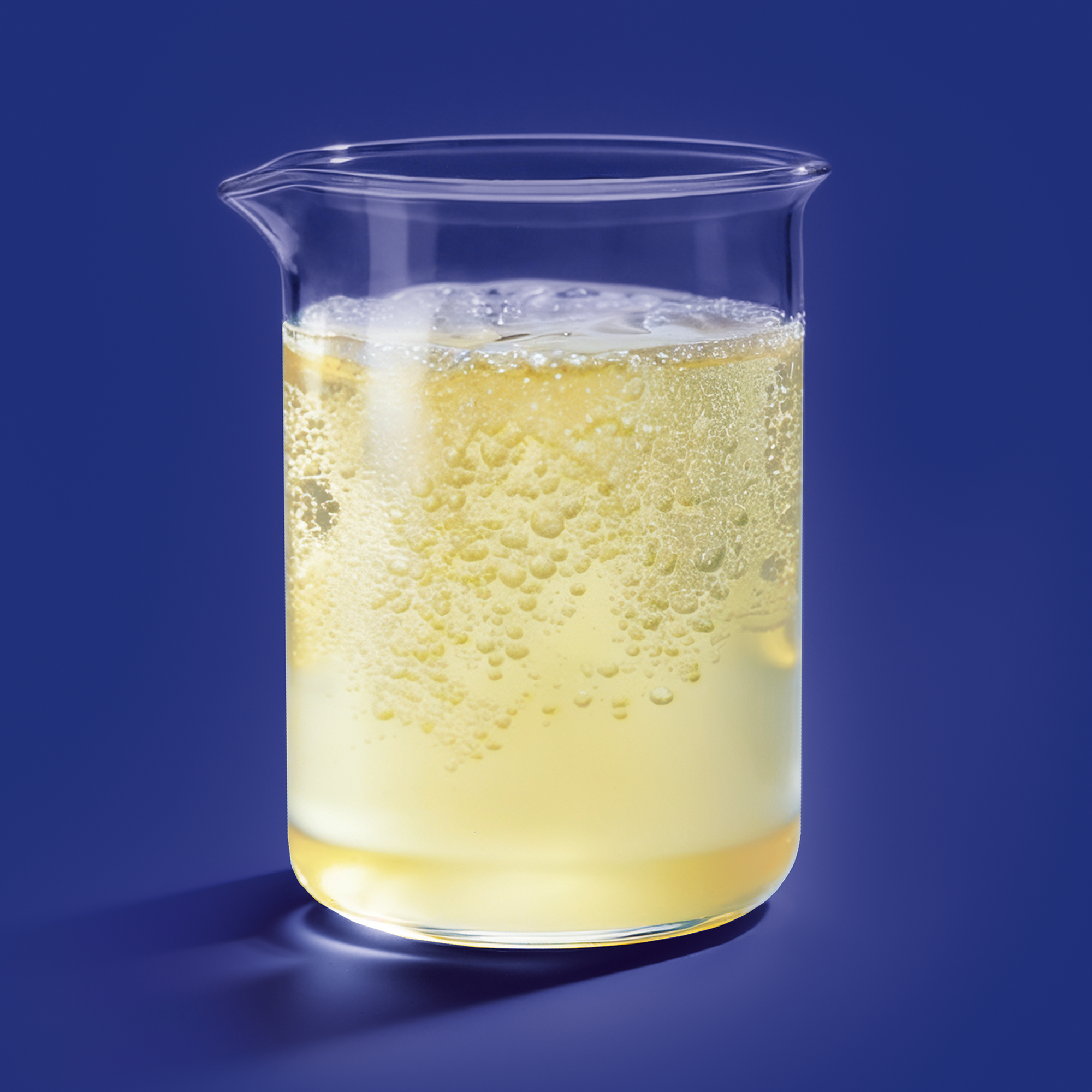
A kombucha base from Good Culture takes the live fermentation step out of your line entirely. As a kombucha manufacturer, you're not managing a culture, you're working with a fermented kombucha supplier built for consistency, batch after batch.
That's the part most growth forecasts don't mention. Every brand scaling into a $10 billion category eventually hits the same wall, commercial kombucha production means solving fermentation control, not just finding demand. The manufacturers who solve it early are the ones who scale fastest, whether you're brewing in-house, working with a kombucha co packer, or sourcing a base supplier directly.
Ready to Take Kombucha Further?
Let’s talk about how we can help you develop, scale, or elevate your kombucha concept - without compromising authenticity or quality.