
Building A Kombucha Business: What The Best Get Right From Day One
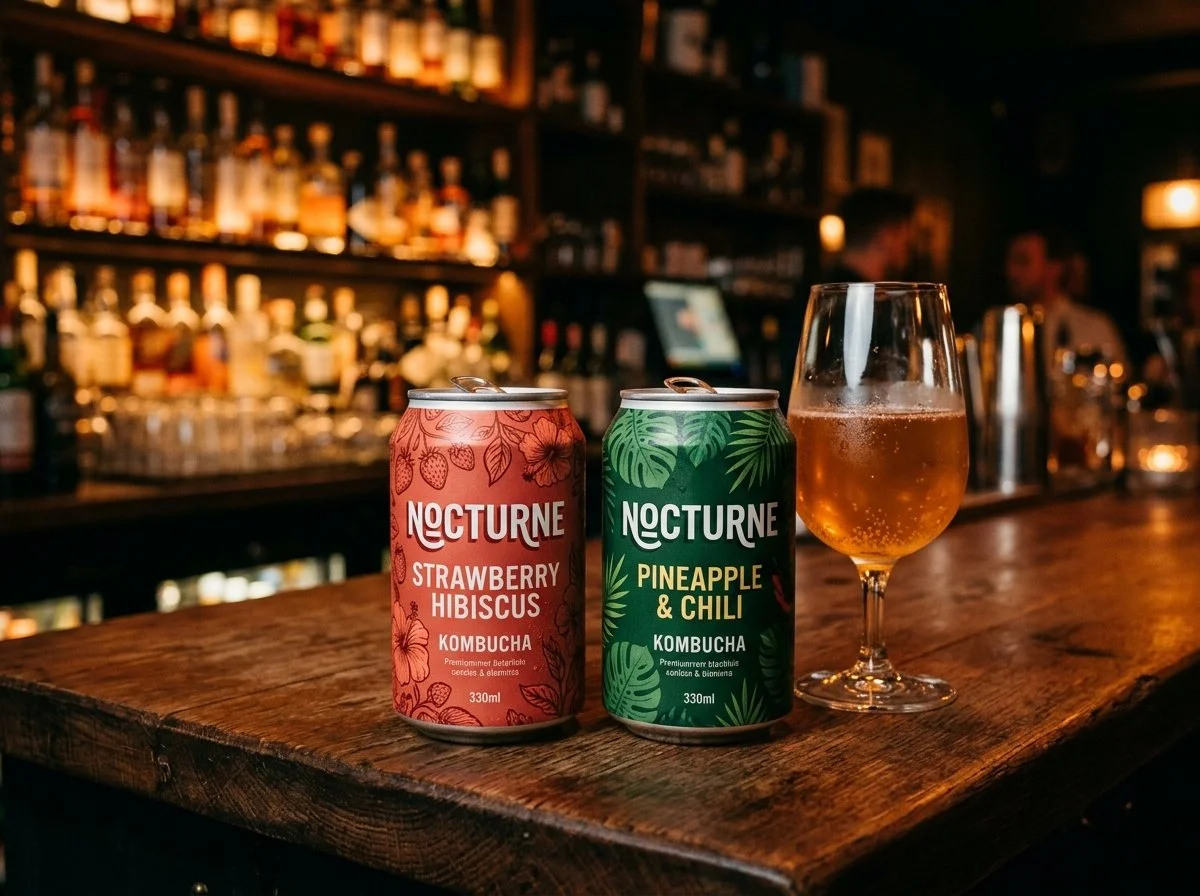
The kombucha shelf has never been more crowded. And it's never been less forgiving of mediocrity.
Brands that launch with a vague "gut health" claim, a green label, and a craft backstory are competing for the same shrinking pool of undecided shoppers - usually on price. Meanwhile, a smaller group of brands are growing fast, winning major retail listings, and expanding into new markets. They're not necessarily making better kombucha. But they are making better decisions. And most of those decisions happen before a single bottle is filled. So, what separates them?
The Kombucha Market Opportunity - And Why It Isn't Evenly Distributed
The global kombucha market is worth $5.5 billion and growing at close to 14% annually, as we outlined in our 2026 Global Kombucha Report. That's a genuinely attractive category by any measure. But the opportunity isn't spread evenly across it, and that's the first thing a brand needs to understand.
Growth is concentrated in specific market positions. Mainstream functional kombucha - consistent, scalable, accessible - is where retail volume is being won. Premium traditional is where margin and brand equity live. Sugar-free and ambient formats are where distribution is expanding fastest, because they remove the cold chain dependency that's kept so many brands out of mainstream grocery.
Brands that launch without a clear position in one of these tiers tend to drift. They try to be premium and accessible. Craft and scalable. Traditional and trend-led. And because the message is muddled, the retailer conversation is harder, the consumer story is weaker, and the production model is usually wrong for what the commercial ambition actually requires.
Position clarity isn't just a marketing decision. It shapes everything downstream.
Choose Your Market Position Before You Choose Your Flavour
This is where most launches go wrong. Product comes first - a flavour the founder loves, a recipe that won a tasting session - and positioning is expected to follow. It rarely does, at least not cleanly.
The brands that get it right work the other way around. They decide who this is for, where it lives on shelf, and what it needs to deliver for that consumer. That's before they've finalised a single SKU. Because those answers determine the format, the price point, the packaging, the channel strategy, and the production model.
A brand targeting mainstream grocery multiples needs something different from a brand targeting premium independent health food. Different ABV documentation expectations. Different shelf life requirements. Different margin structures. Different minimum order quantities. Getting the positioning wrong means spending 18 months building the wrong product for the wrong channel - and finding out at the ranging conversation.
For a more detailed look at how the different market tiers map to specific commercial demands, we've covered more in Finding Your Kombucha Market.
What The Brands Getting It Right Have In Common
So, what does success look like? Fix8 won retail listings by combining strong brand identity with a production model that could respond to demand. Hip-Pop built a strong UK position by being sharply specific - a premium, low-sugar kombucha with a clear aesthetic and a consumer who knew exactly what they were buying. Neither of them succeeded by being broadly appealing. Both succeeded by being the obvious choice for a specific consumer in a specific channel.
If you look at the pattern across the kombucha brands that have scaled successfully and three things show up consistently.
First: a sharply defined consumer. Not "health-conscious adults aged 25–45". you're looking at something more specific. Who is the person reaching for this on a Wednesday afternoon, and why is it this one and not the one next to it?
Second: a production model that matches the commercial ambition. A brand aiming for a major multiple listing needs a supplier and a production setup that can respond to overnight volume demands. This isn't a detail to figure out after the ranging conversation. It's a decision that determines whether you can actually fulfil the listing if you get it.
Third: a channel strategy that fits the position. Europe runs heavily on-premise - 61% of kombucha volume moves through cafés, bars, and restaurants. But North America is retail-first, with close to 60% of volume through mainstream supermarkets. A brand trying to replicate a North American retail playbook in a European market, or vice versa, is likely starting from the wrong map.
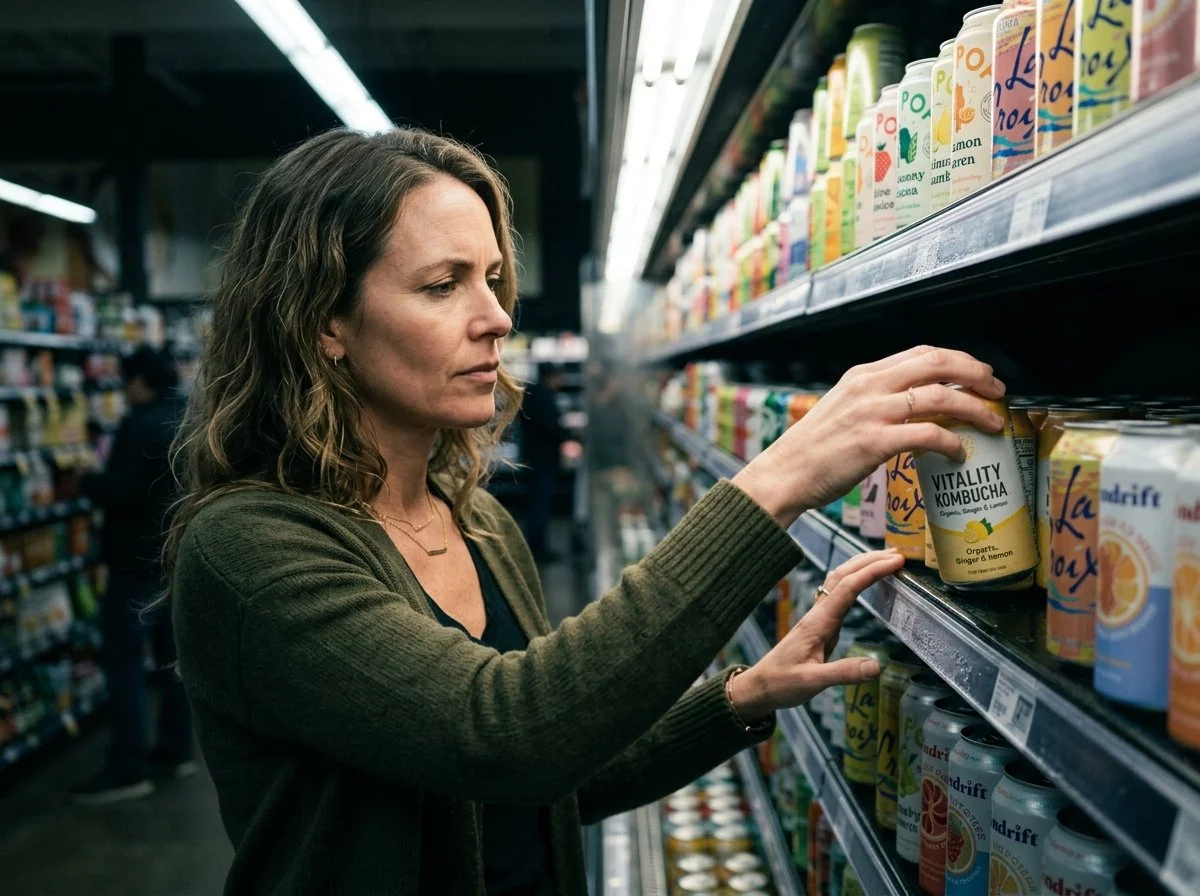
The Consumer Trends That Matter For A Kombucha Launch Right Now
This is the intelligence a commercial team actually needs. It's not a summary of what's growing, but a specific enough picture to shape positioning decisions.
Low sugar is no longer a premium signal. It's a baseline expectation. 76% of consumers are actively limiting sugar intake, as our 2026 Global Kombucha Report outlines. A kombucha that leads with gut health but carries 8g of sugar per 100ml is going to face harder conversations at shelf. And that's because the consumer reading the label is doing the maths.
Gut health has moved from niche to mainstream. It's the number one global wellness trend, and kombucha sits directly in its path. But so does every other probiotic format. The brands winning on gut health claims are the ones making those claims specific and credible. They're not just printing "contains live cultures" and expecting it to do the work.
The no/low alcohol adjacency is real and growing. Millennial and Gen Z consumers aren't choosing between alcohol and kombucha - they're alternating between them in the same social occasion. That creates a specific product brief: kombucha that performs in an on-premise setting, that feels grown-up at a table, that can hold its own next to a wine list. So it's less about removing alcohol and more about adding sophistication.
And premiumisation is happening at volume, rather than just at the artisan end. A consumer willing to pay $4.50 - around £3.50 - for a 330ml can of kombucha in a supermarket is a much bigger market than the one browsing a farmers' market. Brands that can deliver a premium sensory experience at a price point that works in mainstream grocery are in a great position.
Why Your Production Model Is A Brand Decision
Most brands treat the production model conversation as an operational detail to sort out once the brand strategy is done. But the two are inseparable. Because the production model you choose at launch shapes what you can do commercially - how fast you can move, how reliably you can supply, how quickly you can respond if demand spikes beyond forecast.
A brand that wins an unexpected listing with a major multiple needs to fulfil it. That means having a supply chain that can scale overnight without a CAPEX decision. A UK functional brand working with Good Culture bases did exactly that - they met overnight volume demands for a large-scale listing with no new infrastructure. That outcome wouldn't have been possible with a production model built around in-house fermentation and finite tank capacity.
Speed to market matters too. Companies that hit launch targets enjoy profit margins 40% higher on average than slower competitors. In a trend-driven category, arriving six months late is a commercial problem, not just a missed opportunity. A co-packer R&D team working with GC's pre-fermented bases took a full kombucha range from brief to commercially validated recipe in six weeks. That kind of development speed isn't achievable when the production model requires managing live cultures and multi-week fermentation cycles from scratch.
For brands that haven't yet settled on a production model, How To Enter The Kombucha Category Without Building A Brewery covers the options in practical detail.
The best kombucha launches aren't won in the brewery. They're won in the positioning session, the channel conversation, and the production partner decision that happens before a label is even designed. Get those right and the product has a genuine chance. Get them wrong and even a great recipe ends up competing on price in a crowded refrigerator.
Our Global Kombucha Report covers the market data, regional breakdowns, and category intelligence that most commercial teams are working from when they make these decisions. It's worth downloading before any internal conversation about a kombucha launch.
Frequently Asked Questions
What are the biggest mistakes brands make when launching a kombucha product?
The most common mistake is leading with product rather than positioning - developing a flavour and then trying to find a market for it, rather than identifying a specific consumer and channel first. A close second is treating the production model as an operational afterthought, when in practice it determines whether a brand can fulfil listings, hit launch timelines, and scale without a capital investment that might not be available.
How long does it typically take to launch a kombucha brand?
Development timelines vary significantly depending on the production model. Brands building in-house fermentation capability typically take 12–18 months from concept to retail launch. Brands working with pre-fermented bases and co-packers can compress that to 3–6 months, because the fermentation complexity is removed from the development process. Speed to market matters commercially - slower launches frequently miss the trend window they were built for.
What makes a kombucha brand successful in retail?
Retail success in kombucha typically comes down to three things: a specific and coherent consumer proposition, a production model that can fulfil listings reliably at scale, and a price point that works for the target channel. Brands that win major grocery listings are usually those that can demonstrate supply chain reliability - consistent product, consistent volume, consistent compliance documentation - alongside a strong brand rationale.
How important is certification for a kombucha brand entering retail?
Increasingly important. Major grocery retailers expect GFSI or SQF food safety accreditation from suppliers, and organic certification is becoming a baseline expectation in the premium tier. ABV documentation - confirming the product consistently sits below 0.5% - is non-negotiable in most markets, because exceedance creates licensing and tax implications. Brands sourcing from certified ingredient suppliers inherit much of this documentation, which simplifies the retailer conversation considerably.
Which kombucha market tier is growing fastest?
The mainstream functional tier is where retail volume growth is most concentrated - accessible price points, consistent quality, ambient or extended shelf life, and clear functional claims. The sugar-free and ambient segments are also growing fast because they remove cold chain dependency, which opens up mainstream grocery distribution. Premium traditional kombucha continues to grow but from a smaller base, and it's more geographically concentrated in markets with established health food culture.